A car that charges itself in the parking lot sounds simple until you try to build it, price it, crash-test it, finance it, and send it into daily traffic. The Sono Sion became one of the best-known attempts to turn that idea into an affordable solar electric car for normal drivers, not a six-figure science project. Its promise was easy to understand: body panels with embedded solar cells, a practical hatchback shape, a regular EV battery, and enough sun-fed energy to reduce plug-in charging for short trips. For U.S. readers tracking electric vehicle ideas through clean technology reporting, the lesson is bigger than one canceled model. The car showed that vehicle-integrated photovoltaics can make sense, but not always where fans first expect. The hard part was never proving that sunlight could add useful miles. The hard part was turning that proof into a low-cost passenger car while capital markets, production costs, and customer expectations all pushed back at once.
Why Sono Sion Solar Integration Technology Drew Serious Attention
The appeal started with one plain problem: most EVs still depend on a charger, even when they spend hours sitting outside. Sono Motors tried to turn idle surface area into working energy. That made the car feel different from a normal solar electric car concept, because the panels were not an add-on rack or a shiny roof toy. They were part of the body idea.
How the body panels were meant to collect energy
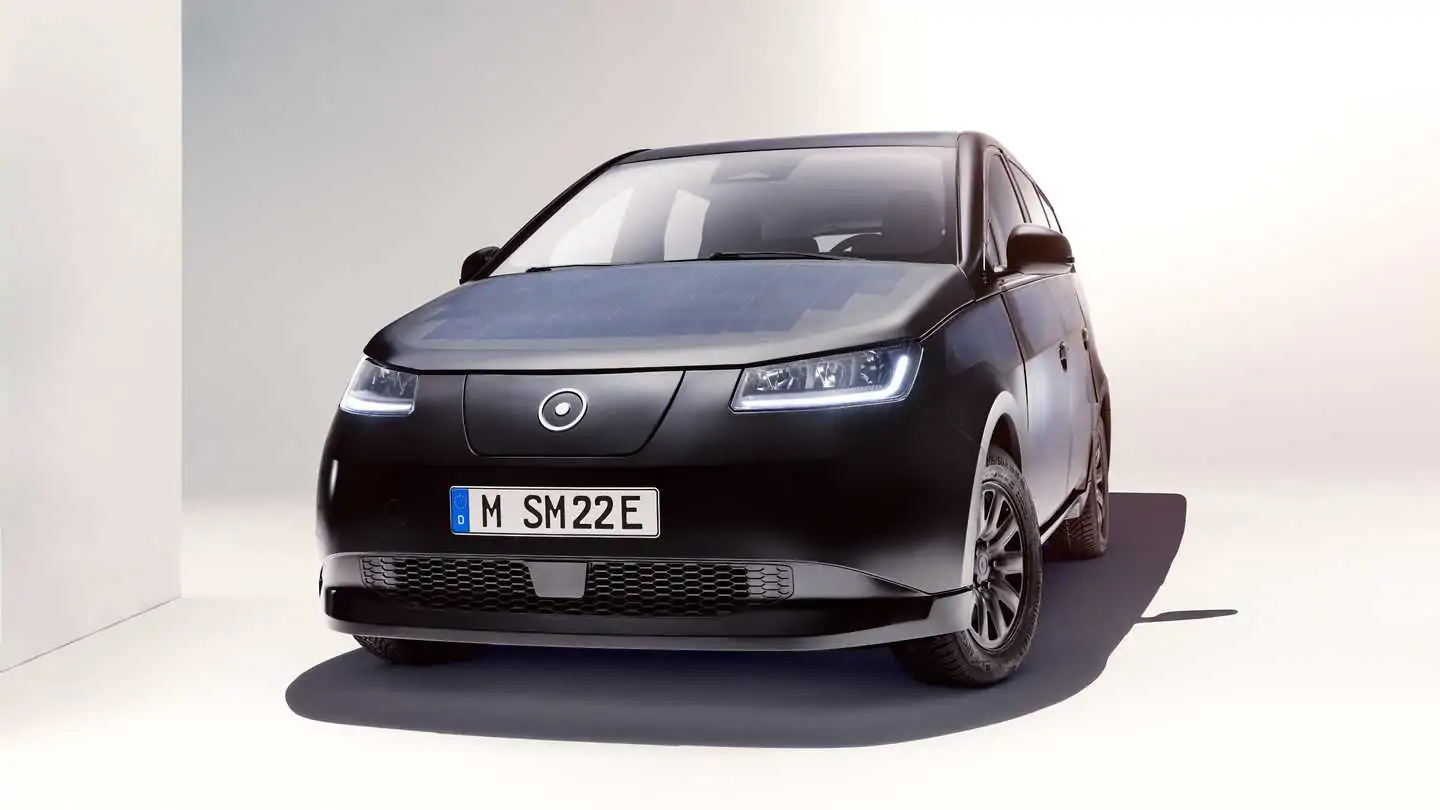
The production-intent Sion used 456 solar half-cells spread across the exterior shell, with the company claiming the system could add an average of about 70 miles of range per week in typical weather and up to about 150 miles per week in stronger conditions. The same company release listed a 54 kWh LFP battery, an estimated 190-mile battery range, 75 kW DC charging, 11 kW AC charging, and 11 kW bidirectional charging.
That mix mattered. A roof-only panel would have been easier to explain, but it would not have given the same talking point. Doors, hood, fenders, and rear surfaces gave the vehicle more collection area. The tradeoff was uglier behind the scenes: curved surfaces, shaded zones, replacement panels, wiring paths, and repair rules all became harder.
The non-obvious lesson is that solar range was not meant to replace charging. It was meant to reduce small charging events. A commuter in Phoenix, San Diego, or Austin might have felt the value more than a driver parking in a shaded garage in Seattle. The technology was local by nature.
Why the concept felt different from other EV experiments
Many early EV stories focused on battery size, fast charging speed, or 0–60 times. This one felt more like a daily-use hack. If your car sits in a grocery store lot, an office park, or a driveway, it can gather a small amount of energy without you doing anything.
That is why vehicle-integrated photovoltaics caught attention beyond car fans. It gave the Sion project a clear identity in a crowded EV market. A Tesla rival needed a giant charging network. A low-cost solar hatchback only needed enough sunlight to make owners feel that the car was giving something back each day.
Still, the same strength created a trap. The solar skin was visible, easy to market, and easy to overread. Some buyers heard “solar car” and imagined freedom from plugs. The actual win was smaller and more practical: fewer top-ups, less auxiliary load, and a little more range when the car sat outside. That gap between dream and daily math became one of the project’s hidden problems.
The Engineering Was Clever, but the Business Case Was Harsh
The first section explains why the idea had pull. The next question is colder: could it be built at the promised price? That is where the story changes. A useful solar electric car is not the same thing as a profitable one.
Why affordable manufacturing became the wall
Sono Motors said in October 2022 that the car was expected to cost about $25,000 and that production with Valmet Automotive in Finland was planned for the second half of 2023. It also said the long-range production aim was about 257,000 vehicles over seven years.
Those numbers were bold. In the U.S. market, a $25,000 EV with a special solar body would have landed near the price of basic gasoline cars and below many battery EVs. That was the point. But affordability gives a startup almost no room for mistakes. Every custom panel, controller, supplier delay, warranty risk, and tooling bill hits harder when the sticker price is low.
A luxury brand can hide weird new technology inside a high margin. An affordable hatchback cannot. That is the counterintuitive part. The cheaper the car was meant to be, the less freedom the team had to absorb the cost of its most interesting feature.
What repair, warranty, and weather meant in the real world
A solar body sounds elegant until a shopping cart dents a door. Then the question changes. Does the repair shop replace a normal panel, a solar panel, wiring, coating, or controller link? Does insurance treat it like body damage or energy hardware? Would a hailstorm in Texas turn a green feature into a claims headache?
The U.S. Department of Energy has flagged many of these same issues for vehicle PV systems, including cost, performance, durability, repair, replacement, standards, insurance, and the difficulty of modeling solar yield on a moving vehicle. Its summary also points to range extension and auxiliary loads as the main use cases for vehicle PV systems. U.S. Department of Energy overview of vehicle-integrated photovoltaics
That explains why the idea may fit fleets better than private cars. A delivery van, bus, or refrigerated trailer has predictable routes, known parking patterns, and business math tied to fuel or auxiliary power. A family hatchback has emotional buyers, mixed parking habits, and repair anxiety. Same technology. Different pressure.
For related reading, connect this topic with EV charging cost guide and solar power for home energy savings when you publish.
What Actually Happened to the Sion Project
By early 2023, the tension was no longer technical curiosity versus public interest. It was cash versus production reality. The vehicle had fans, reservations, and prototypes, but the company still needed enough money to cross the expensive gap between validation and mass production.
Why Sono Motors stopped the passenger car program
On February 24, 2023, Sono Motors announced that it had terminated the passenger car program and would focus on retrofitting and integrating its solar technology onto third-party vehicles. The company said the car program had driven an estimated 90% of its 2023 funding needs and that the decision came during difficult capital market conditions.
That sentence is the heart of the story. The car did not fail because solar cells cannot work on vehicles. It failed because launching a new car company is one of the most cash-hungry things a startup can attempt. Solar made the vehicle special, but the rest of the car still needed the brutal basics: tooling, homologation, suppliers, logistics, service plans, and customer support.
The company also said it had more than 45,000 reservations and pre-orders before the save-the-project campaign, and it announced a repayment plan for reservation holders. About 300 jobs were planned for redundancy as the business shifted.
Why the solar work did not disappear
The better way to read the shutdown is not “solar cars are dead.” It is “the first mass-market route was too heavy.” Sono Motors said it had 23 B2B customers piloting integrated solar technology across Europe, Asia, and the United States, including applications on buses, refrigerated vehicles, recreational vehicles, and third-party OEM cars.
That pivot makes sense. A bus roof gives more area than a compact hatchback. A refrigerated trailer uses power while parked or moving. A delivery fleet can measure savings across hundreds of vehicles. A private buyer may love the idea, but a fleet manager can turn sunlight into a spreadsheet.
The Sion project became less valuable as a car and more valuable as a proof point. It showed where the dream was too expensive, but it also exposed where vehicle-integrated photovoltaics could earn its keep. That is not the ending fans wanted. It may still be the more useful ending.
What the Project Means for U.S. Drivers and Future Solar EVs
American readers should avoid two lazy takes. The first is that the canceled car proves solar on vehicles is a gimmick. The second is that every EV should have solar panels now. Both miss the point. Solar on vehicles works best when the use case respects the small, steady nature of sunlight.
Where solar vehicle tech can make sense in America
The U.S. has big regional differences. A car parked outside in Arizona is not living the same energy life as a car under trees in Oregon. A Florida contractor van, a California airport shuttle, and a Texas refrigerated truck all give solar hardware different chances to pay back.
Sono’s later commercial work points in that direction. The current Sono Solar site describes tests involving refrigerated trailer pilots, solar charge controllers, and a Ford E-Transit fitted with a 1 kWp solar installation, where the controller converts lower-voltage solar power to the vehicle battery’s high-voltage level.
That is the practical lane. Auxiliary loads may be less glamorous than a self-charging family car, but they can be easier to value. If solar helps run refrigeration, fans, telematics, liftgates, or climate equipment, the owner does not need a miracle. The system only needs to offset enough energy to matter.
Why the passenger-car dream still has value
The canceled car still changed the conversation. It made normal drivers ask whether a parked EV should waste daylight. That question will not go away. As batteries get cheaper, panels get lighter, and power electronics improve, some automakers may revisit the idea in smaller ways.
The likely path is not a magic car that never plugs in. It is a car that reduces drain, supports parked ventilation, adds modest miles, and gives owners a cleaner buffer for short trips. That sounds less dramatic. It is also more believable.
For U.S. buyers, the buying advice is simple: judge solar vehicle claims by use pattern, not by romance. Ask where the car parks, how many sunny hours it gets, what the panels power, how repairs work, and whether the maker has real data from similar climates. The sun is free. The hardware is not.
Conclusion
The story ends with a strange mix of disappointment and progress. A bold car did not reach showrooms, yet the engineering behind it did not vanish. That matters because many clean transport ideas fail in one form before finding a better shape somewhere else.
The Sono Sion still matters because it proved that an affordable solar electric car could capture public interest, while also showing how hard it is to price, build, repair, and finance one at mass scale. The better future for this technology may start with vans, buses, trailers, and fleet vehicles before it returns to private driveways.
For drivers in the United States, the smartest takeaway is not blind hype or easy dismissal. Watch the boring applications first. Refrigeration, auxiliary loads, parked fleet vehicles, and sunny-route vans may tell us more than any concept car ever could. Follow that trail, and the next solar EV story will make far more sense.
Frequently Asked Questions
What happened to the Sion electric car project?
Sono Motors ended the passenger car program in February 2023 and shifted toward solar technology for third-party vehicles. The company cited funding pressure, high development costs, and weak capital market conditions as major reasons behind the decision.
Was the Sion supposed to charge only from the sun?
No. It was designed as a battery EV with plug-in charging plus solar support. The solar body panels were meant to add extra range over time, not replace normal charging for every driver in every climate.
How much range could the solar panels add?
Sono Motors claimed the system could add about 70 miles per week in typical weather and up to about 150 miles per week in better conditions. Actual results would have depended on location, shade, season, parking habits, and driving use.
Why did the car not reach production?
The project reached the point where production funding became the main barrier. Building an affordable EV with custom solar body panels required far more capital than the company could secure under the market conditions at that time.
Is vehicle-integrated photovoltaics useful for normal cars?
It can be useful, but the value depends on sunlight, surface area, cost, and repair design. For many private cars, the benefit may be modest. For fleets with predictable routes and outdoor parking, the case can be stronger.
Did Sono Motors abandon solar technology completely?
No. The company moved away from building its own passenger car and focused on solar systems for other vehicle types. Later work centered on commercial vehicles, charge controllers, refrigerated transport, buses, vans, and fleet applications.
Could a similar solar electric car come to the U.S. market?
Yes, but it would need careful pricing, reliable service plans, repair-friendly panels, and strong proof from real climates. U.S. buyers would also need clear expectations about solar range, since shade and parking habits change the outcome.
What is the biggest lesson from the project?
The biggest lesson is that good technology does not guarantee a buildable car. Solar body panels can add value, but mass production, repairs, insurance, funding, and customer expectations decide whether the idea survives beyond prototypes.