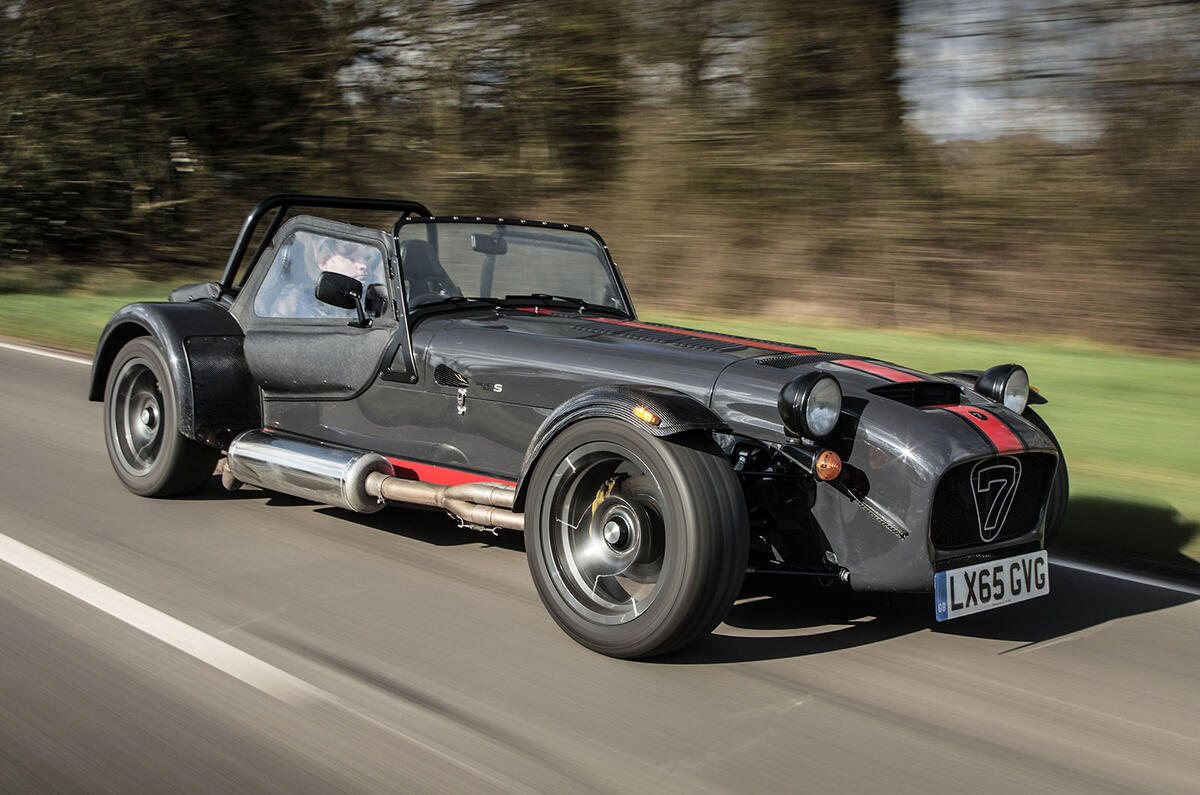
A Caterham Seven does not need wild power to feel fast. It needs the right power, in the right place, with the right supporting parts. The best engine swap options are not always the ones with the biggest dyno sheet. In a car this light, 40 extra horsepower can change the whole mood, but 80 extra pounds over the nose can ruin the steering that made you want a Seven in the first place. That is the trap many builders miss.
For American owners, the search is even more layered. You are not only picking an engine. You are thinking about state registration, emissions paperwork, parts supply, heat, drivability, track rules, and whether the car still feels like a Seven after the work is done. A builder in Texas may have a different path than one in California or New York. That makes planning matter. For owners comparing rare builds, forums, auction listings, and specialty shops, a strong automotive project planning resource can help frame the decision before money starts leaving the bank.
Caterham Seven Engine Swap Options Worth Planning Around
The Seven rewards restraint more than most performance cars. That sounds odd when the whole point is to go faster, but the chassis has a clear voice. Add power that matches the weight, gearing, cooling, and tires, and the car wakes up. Add power without a plan, and the car starts to argue with you.
Why a Duratec conversion often feels right
A Duratec conversion sits near the sweet spot for many Seven owners because it does not fight the car’s nature. The Ford four-cylinder is common enough to support, light enough to respect the front end, and strong enough to make the car feel sharp without turning every drive into a wrestling match. It also has a long record in Caterham circles, which matters when you need mounts, exhaust routing, sump answers, and tuning help.
The factory’s own use of Ford Duratec power says plenty. When an engine family already appears in higher-output Seven models, the swap path tends to look less like invention and more like careful upgrading. That does not make it cheap. It means fewer blind corners.
A clean Duratec conversion also suits American ownership. Parts access is decent, tuners understand the platform, and the power band works on back roads. You can short-shift through a neighborhood, then let the engine breathe on a canyon road or track day. That range matters more than peak horsepower on a spec sheet.
When more power makes the car harder to enjoy
The strange truth is that a Seven can become less fun as it gets faster. Big power can shrink the usable part of the throttle. The car leaps forward, the rear tires work overtime, and the driver starts managing fear instead of flow. That may sound exciting in a video. On a rough two-lane road, it gets old.
This is where Caterham Seven performance upgrades need a cold eye. A 250-horsepower build can feel perfect with proper brakes, dampers, cooling, and tires. The same engine in a tired chassis can feel nervous and unfinished. Power exposes every weak part.
Think of a Seven leaving a Cars and Coffee lot in second gear. With balanced power, it sounds alive and pulls cleanly. With too much torque and poor setup, it hops, spins, and makes the owner look busy for the wrong reason. The smart build is not the loudest one. It is the one you trust at half throttle, full throttle, and on the drive home.
Four-Cylinder Swaps Keep the Seven Fast Without Losing Its Shape
Once the goal is clear, four-cylinder swaps become the most sensible path for most owners. They protect the car’s basic layout, keep weight within reason, and leave room for cooling and service access. They also avoid the packaging drama that comes with larger engines.
Ford Duratec power is the safest serious step
A naturally aspirated 2.0 or 2.3 Ford Duratec build can deliver the kind of shove a Seven needs without burying the front axle. It revs well, responds to cams and intake work, and keeps the car familiar. For street and track use, that balance is hard to beat.
The main appeal is not only speed. It is repeatability. A well-built Duratec Seven can run sessions, cool down, and drive home without turning every event into a troubleshooting day. That is why a Duratec conversion often wins against more exotic ideas when the owner plans to drive often.
There is also resale logic. A buyer looking at a Seven with known Ford power feels less nervous than one staring at a rare swap with homemade brackets and mystery wiring. Good documentation, receipts, and tidy installation can make the car easier to understand. That confidence has value.
Honda K-series, Zetec, and EcoBoost swaps need sharper judgment
A Honda K-series swap can be brilliant, especially for drivers who love revs and modern tuning support. The engine has huge aftermarket depth in the U.S., and the power per dollar can be tempting. The problem is not the engine. The problem is making it live in a Seven without turning the rest of the build into a puzzle.
Zetec swaps have an older-school charm. They may not feel as fresh as a Duratec, but they can be cost-aware, proven, and friendly for a road car. For owners with a lighter budget, a tidy Zetec can beat a half-finished dream build every time.
EcoBoost swaps are more complicated. Turbo torque sounds perfect until heat, plumbing, boost control, and throttle response enter the room. A turbo Seven can be quick in a straight line, but the engine bay is small and heat has nowhere polite to go. The non-obvious lesson is simple: turbo power may cost less at the engine stand and more everywhere else.
For deeper planning, link this topic later to your manual transmission upgrade planning guide. Gear ratios can make or break the result, especially when a swap changes the way the engine pulls.
Bike Engines and Forced Induction Create a Different Kind of Car
Some owners do not want a better road Seven. They want a machine that feels closer to a sprint car with license plates, where allowed. That is where bike engines and forced induction enter the conversation. These builds can be stunning, but they ask for a different mindset.
A Hayabusa powered Seven rewards the right driver
A Hayabusa powered Seven is not about lazy torque. It is about revs, sound, lightness, and commitment. The car feels alive at engine speeds that would seem absurd in a normal street car. On track, that can be addictive. The whole machine feels wired into your right foot.
The trade-off is daily comfort. Bike-engine cars can be busy at low speed, loud on the highway, and less relaxed in traffic. Reverse gear can become a separate problem. Clutch feel, gearing, driveline shock, and cooling all need care. The engine is not the whole swap. The way it talks to the rear wheels matters.
For an American owner who lives near wide roads and long highway stretches, a Hayabusa powered Seven may feel less natural than it does on a short, tight course. That does not make it wrong. It means the car should match the roads you use, not the fantasy you watched online at midnight.
Supercharged and turbo builds demand heat control first
Forced induction has one clear promise: big power from a compact engine. In a Seven, that promise comes with a bill. Superchargers and turbos add heat, parts, belt or boost issues, and tuning sensitivity. The car may make more power, but it may also become more fragile in summer traffic.
A supercharged Duratec-style build can feel savage and clean when done well. Power arrives fast, and the Seven’s low weight makes the result feel almost unfair. Yet the cooling system, fuel system, brakes, and differential need to keep up. A single weak link can ruin the car.
The counterintuitive part is that forced induction often needs a softer tune to feel better. A peaky map may impress on paper. A calmer map can make the car faster in human hands because you can feed in throttle earlier and with less tension. That is why experienced builders talk about response, not only output.
Later, this section can connect to a track day setup checklist, because power is only one part of a safe session. Tire age, brake fluid, alignment, belts, and cooling checks decide whether the day ends with a grin or a tow strap.
U.S. Paperwork, Chassis Balance, and Parts Support Decide the Winner
By this point, the best swap may sound like a mechanical choice. It is not. In the United States, paperwork can shape the build before the first wrench turns. A Seven may be a kit, a replica, a previously titled car, a race car, or a state-specific oddity. That status affects what makes sense.
Registration can shape the build before the first bolt turns
Before buying an engine, check how your state views the car. Some states focus on the year of the body or kit. Others look at the engine, title history, emissions equipment, inspection category, or special construction rules. California, New York, and other strict states deserve extra caution.
The EPA’s kit car policy is a good starting point, but it is not a substitute for your state DMV process. Keep receipts for the engine, chassis, transmission, ECU, and emissions parts. If the car already has a clean title, do not assume a new powertrain keeps life simple.
This is where a mild, well-documented swap may beat a wild one. A known Ford-based build with clear parts records can be easier to explain than a mixed engine package with deleted emissions gear and no paper trail. Fast is fun. Registered is better.
Budget for the systems nobody brags about
The engine gets the attention, but the supporting systems decide whether the car feels finished. Cooling, oil control, exhaust clearance, wiring, fuel delivery, clutch actuation, driveshaft alignment, and differential ratio all deserve money. So do brakes and tires.
A common mistake is to price the engine and ignore the rest. The better move is to build a parts map first. Write down every system the swap touches. Then add labor, tuning, fabrication, fluids, dyno time, and a safety margin. A Seven has fewer parts than a modern sedan, but the parts are closer together and less forgiving.
Caterham Seven performance upgrades should also respect the driver. A 310-horsepower car may be thrilling, but a 200-horsepower car with perfect pedals, fresh dampers, smart gearing, and a clean alignment can be quicker for more people. The best build is not the one that scares passengers. It is the one that lets you drive better.
Conclusion
A Caterham Seven is honest in a way most cars are not. It tells you when the engine is too heavy, when the gearing is wrong, when the rear tires are tired, and when the builder cared more about numbers than feel. That honesty is why swaps demand respect.
The smartest engine swap options start with the car’s purpose. Street use points toward a mild Duratec, Zetec, or carefully planned K-series. Track use can make a higher-output Duratec, bike engine, or forced-induction setup worth the extra work. Either way, the winner is the package that keeps the Seven light, clear, legal, and easy to trust.
Do not build for the loudest forum reply. Build for the road you drive, the rules in your state, and the version of speed you can enjoy more than once. Choose the engine that makes the whole car better.
Frequently Asked Questions
What is the best engine for a Caterham Seven swap?
A Ford Duratec is often the safest serious choice because it offers strong power, known parts support, and a good weight balance. A Honda K-series can also work well, but it usually needs more custom planning around mounts, wiring, exhaust, and transmission fit.
Is a Duratec conversion worth it for street driving?
Yes, when the build stays mild and well matched. A Duratec conversion can make the car faster without ruining low-speed manners. It works best with proper cooling, oil control, gearing, and brakes rather than chasing peak horsepower alone.
Can you put a Honda K-series in a Caterham Seven?
Yes, but it is not a simple drop-in job. The K-series has strong U.S. aftermarket support, yet packaging, wiring, engine height, exhaust routing, and gearbox choice need careful planning. It suits builders who can handle custom work.
Is a Hayabusa powered Seven good for daily driving?
Usually not. It can be thrilling on track or short blasts, but high revs, noise, gearing, reverse solutions, and clutch behavior can make daily use tiring. It is better for drivers who want a raw, focused machine.
How much horsepower is enough in a Caterham Seven?
Around 180 to 220 horsepower can feel fast in a Seven because the car is so light. More power can be fun, but it demands better tires, brakes, suspension, cooling, and driver skill. Balance matters more than the final number.
Do engine swaps affect Caterham Seven registration in the USA?
They can. State rules differ, and title status matters. Some inspections may focus on emissions equipment, engine year, or special construction paperwork. Keep receipts and check your DMV process before buying parts, especially in strict emissions states.
Is turbocharging a Caterham Seven a good idea?
It can work, but heat and throttle control become harder. The engine bay is small, and turbo plumbing adds weight and complexity. A mild turbo setup with careful cooling is better than an aggressive setup that overheats or feels jumpy.
What should I upgrade before adding more power?
Start with brakes, tires, dampers, cooling, oil control, and alignment. Then look at clutch, differential, driveshaft, fuel system, and wiring. A Seven with sorted supporting parts will feel faster and safer than one with power added first.