Loose steering does not always arrive as a dramatic failure. The first drag link symptoms often feel like a tired truck, a soft tire, or a road crown pulling you around. That is why many owners keep driving until the front end starts arguing back. In a full-size pickup, work van, or older solid-axle 4×4, the drag link carries a direct command from the steering gear toward the wheels. When its joints wear, the steering wheel may move before the tires answer. That delay can turn a calm highway lane change into a small wrestling match. For drivers comparing repair notes, service habits, and other automotive upkeep advice, the smart move is to treat loose truck steering as a warning, not a personality trait. A worn link rarely fails alone. It often points to steering linkage wear across nearby parts, and it can hide behind tire wear, alignment drift, or front end vibration until a mechanic puts eyes on the joints.
Worn Drag Link Symptoms Usually Start Before the Wheel Feels Dangerous
A failing drag link does not need to hang loose to make a truck feel wrong. The early stage is smaller and sneakier: a little dead zone at the wheel, a faint knock in a parking lot turn, or a sense that the truck takes a breath before changing direction. That delay matters because truck steering has mass behind it. Bigger tires, heavy diesel engines, lifted suspensions, and worn bushings all add noise to the diagnosis. The mistake is waiting for the truck to scare you. By the time the front end feels wild, the wear may have spread into tires, ball joints, and other steering parts. Many owners also get used to the problem. They add tiny corrections without thinking, then notice the difference only after driving another truck that tracks straight.
Loose truck steering at highway speed
Highway looseness is the sign most owners notice first. You hold the wheel straight, but the truck drifts a few inches left or right, then needs a correction. After a few miles, your hands get busy. You are not steering once; you are catching the truck again and again.
A worn drag link joint adds play between the steering gear and the knuckle or steering arm. On many American pickups, that play feels worse at 55 to 70 mph because small wheel movements now have enough road speed to matter. The counterintuitive part is that the truck may feel fine in a driveway. Low speed can hide slop that highway speed exposes.
Do not blame alignment first. An alignment issue can pull the truck in one direction, but loose truck steering often wanders both ways. A good shop will check the link, tie rod ends, pitman arm, track bar on solid-axle trucks, wheel bearings, and tire condition before touching the alignment rack. That order saves money and keeps you from paying for an alignment that cannot hold. A worn joint can let the tires change direction under load, so the printout may look better than the truck feels. The machine can set angles, but it cannot remove slack from a loose socket.
Clunks, delayed response, and steering wheel play
A dry or worn socket can make a dull clunk when you turn into a driveway, back a trailer, or shift from reverse to drive with the wheel turned. The sound may seem small from the cab. Under the truck, the joint may be moving in a way it should not. A truck that clunks only at low speed still deserves attention because the load is high when the tires scrub across pavement.
Steering wheel play is different from normal steering ratio. Older trucks will not feel like a sports car, and big tires can make the wheel feel slower. The test is whether the wheel moves while the front tires wait. If you can turn the steering wheel a few degrees before the tires react, the front end needs inspection.
Here is the quiet trap: power steering can mask mechanical wear. The pump keeps the wheel easy to turn, so the driver feels comfort while the linkage loses precision. That is why a loose front end can feel harmless on short errands, then feel sloppy once the truck carries tools, a camper, or a trailer. Weight does not create the worn joint, but it makes the delay harder to ignore.
Why Steering Linkage Wear Changes the Whole Truck Feel
Once the drag link has play, the rest of the steering system has to work around that gap. The tires still follow the road, but the driver no longer has clean control over the first inch of movement. That creates fatigue. It also makes other parts look guilty, because one loose joint can pass motion into several places before the wheel finally turns. A truck can feel “old” when the deeper issue is a lost connection between input and response. That difference matters. Age is not a repair plan. The driver feels the result before the part looks dramatic. A joint can pass a fast glance and still allow enough movement to make the cab feel unsettled on grooved concrete, bridge seams, or patched rural pavement.
The link between drag link play and front end vibration
Front end vibration can come from tires, bent wheels, brakes, hubs, control arms, track bars, ball joints, and more. The drag link is not always the root. Still, a loose joint can let an existing vibration speak louder through the steering wheel. It gives the shake a pathway.
Think of a contractor’s three-quarter-ton pickup with aggressive all-terrain tires. A tire that is slightly out of balance may create a mild shake. Add play in the steering linkage, and that same shake can start to feel like the whole nose is nervous. The tire began the problem, but the loose link made it harder to control.
This is where quick guesses fail. Replacing tires may soften the shake without fixing the steering. Replacing the link may sharpen steering without curing a bent wheel. A careful inspection separates movement from vibration, and that is the difference between repair and parts swapping. The best question is not “what part causes shaking?” It is “which part moves when it should stay tight?”
Why lifted trucks show problems sooner
Lifted trucks can reveal steering faults earlier because geometry changes the load path. A taller suspension, wider wheels, and larger tires can increase stress on linkage joints. Even a mild leveling kit can change how the truck responds to road seams, ruts, and braking force.
The non-obvious point is that a lift does not have to be extreme to expose weak parts. A stock joint with 140,000 miles may act acceptable on factory tires. Put heavier tires on the same truck, then add offset wheels, and the driver may suddenly feel wander that was already forming. The modification gets blamed, but the wear was waiting.
Owners should pair suspension changes with a front-end check, not after problems appear but before the first long trip. A good front suspension inspection guide can help you track what to ask for at the shop. For safety concerns or possible recalls, the official NHTSA vehicle safety and recall resource is also worth checking before you spend money on parts. That extra check matters for used trucks, where past repairs and recall history can be hard to read from a clean dashboard. It also helps separate a known safety campaign from normal wear, which keeps you from paying twice for a problem the manufacturer may already track.
How to Inspect a Suspect Drag Link Without Guessing
Diagnosis should begin with movement, not opinion. A truck owner can describe the feel, but the joint itself tells the truth when someone watches it under light steering load. The goal is simple: find where the steering wheel movement disappears before it reaches the tires. You do not need to turn the inspection into a full rebuild in your driveway. You need enough evidence to know whether the truck should go on a lift, get parts ordered, or stay parked until a pro checks it. This inspection also slows down panic buying. A steering complaint can sound expensive in the cab, yet the visible failure may be one joint, one bushing, or one tire with a broken belt.
The driveway check that reveals hidden play
Park on level ground, set the parking brake, keep hands and tools clear of pinch points, and have a helper rock the steering wheel left and right in short movements. The engine may need to be off or on depending on steering effort, but the movement should stay small. You are not turning lock to lock. You are loading the joints.
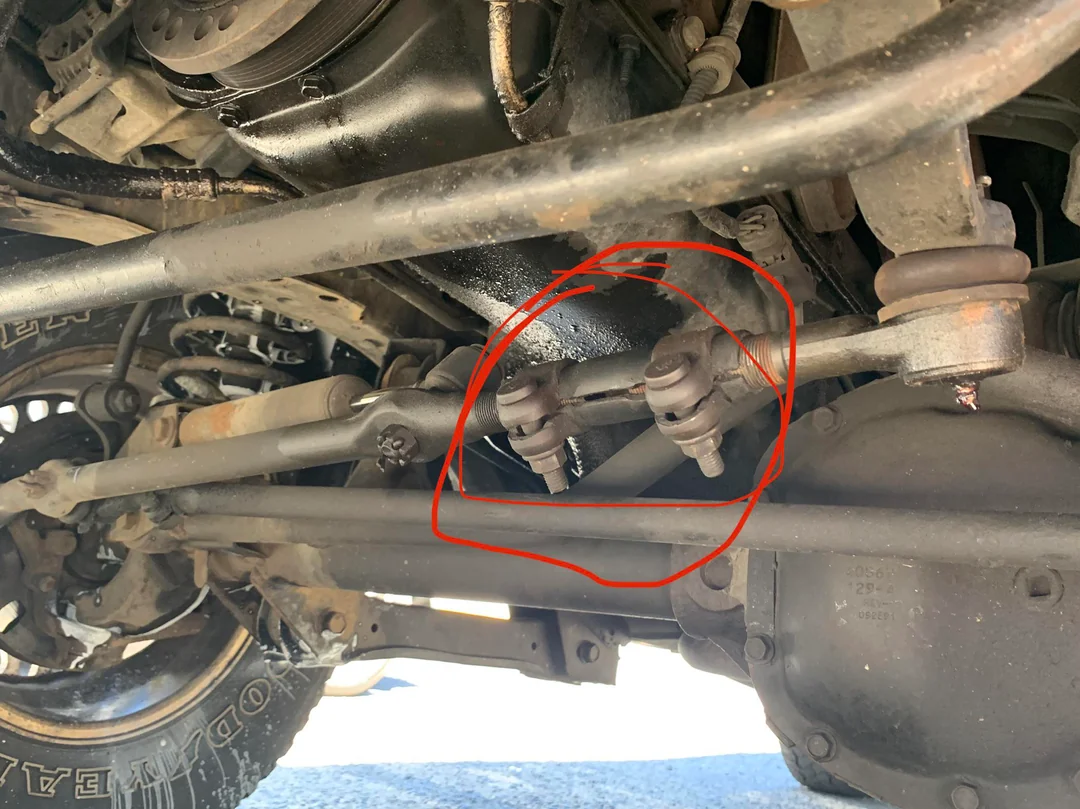
Watch the drag link ends, the pitman arm connection, and the steering arm or knuckle connection. A healthy joint moves as one piece. A worn one may show a tiny jump, a delay, or a stud shifting inside the socket before the rest of the link follows. That small delay is the dead spot you feel through the steering wheel.
Boot condition matters, but it does not tell the whole story. A torn boot invites grit and water, yet an intact boot can still hide wear. Grease fittings can also fool owners. Fresh grease may quiet a joint for a while, but it cannot restore metal that has worn away. If the sound fades for a week and comes back, the grease gave you a clue, not a cure.
When symptoms point beyond the drag link
A truck can have steering looseness from several places at once. Tie rod ends control toe. Ball joints support wheel movement. Wheel bearings can add play at the hub. A track bar on many solid-axle trucks locates the axle side to side. If the track bar moves, the whole axle can shift before the truck turns.
That is why one-person diagnosis often misses the source. The steering wheel tells you the truck has a delay, but it cannot tell you which joint allowed it. You need one person at the wheel and another watching the parts. On a heavy-duty pickup, a loose track bar bushing can mimic a bad drag link. On an older half-ton, a worn idler arm or pitman arm may create similar wheel play. The symptom feels the same in your hands, but the repair is not the same under the truck.
For a cleaner process, note the condition before the shop visit: speed range, road surface, braking behavior, tire pressure, tire age, and whether the truck pulls, wanders, shakes, or clunks. Then compare the mechanic’s findings with a truck steering repair checklist. Good notes keep the conversation grounded. They also protect you from vague repair advice that sounds confident but skips the proof.
Repair Choices That Keep the Problem From Coming Back
Replacement is often direct, but the quality of the repair decides whether the truck feels tight for years or drifts again by next season. The drag link lives low, takes road spray, carries steering load, and absorbs shock from potholes. Cheap parts can look fine in the box and still feel vague once the truck is back on worn roads. This is one repair where the lowest price can cost more if it sends you back for tires, another alignment, or a second round of labor. The better goal is not the cheapest part. It is one clean repair that brings the steering back to center and stays there through potholes, rain, heat, and loaded miles.
Part quality, torque, and alignment matter
A proper repair uses the correct part for the truck’s year, model, suspension setup, and steering layout. That sounds obvious until you see how many pickups have lift kits, swapped axles, aftermarket wheels, or mixed steering parts from earlier repairs. The safest answer is the part that matches the actual truck in front of you, not only the VIN on paper.
Torque settings matter because steering parts depend on clamping force and taper fit. A castle nut, cotter pin, and tapered stud should not be treated like ordinary hardware. If the taper does not seat, the joint can move. If the fastener is over-tightened or under-tightened, the repair can create a new problem.
Alignment should follow most steering linkage work. The drag link itself often affects steering wheel center more than toe, depending on the design, but related work can change front-end angles. Even when the tires look straight, the steering wheel may sit off-center, and modern stability systems may read that as a problem. A centered wheel is not cosmetic. It helps the truck and driver agree on straight ahead. It also gives the next inspection a clearer baseline because the shop can tell whether new wear has changed the wheel position.
Why replacing one part may not be enough
The frustrating truth is that one new drag link can make the next weak part easier to feel. Tighten the main connection, and a worn tie rod end, track bar bushing, or steering box play may stand out. That does not mean the first repair failed. It means the front end no longer hides the second fault.
This is common on trucks used for plowing, towing, ranch work, oversized tires, or rough county roads. A 2500-series pickup that hauls a skid steer on weekdays will age its steering parts differently from a grocery-getter. Mileage matters, but load history matters more. A truck with 80,000 hard miles can need more front-end work than one with 160,000 easy highway miles.
After repair, judge the truck over several conditions: low-speed turns, highway lanes, braking, rough pavement, and a parking lot with the wheel near full turn. A successful repair should reduce wander, sharpen response, and remove the knock. It should not create a new pull, bind, or steering wheel offset that the shop waves away. Ask for the old parts back if you want proof. A loose joint in your hand explains more than a line item on an invoice.
Conclusion
A loose truck front end is easy to ignore because it often gets worse by inches, not all at once. That slow creep is what makes it risky. You adapt your hands, widen your lane corrections, and start calling the truck “old” when the steering may be asking for a proper inspection. The drag link symptoms that matter most are the ones that change how fast the tires answer the wheel. When you feel wander, clunks, delayed response, uneven tire wear, or front end vibration, treat them as connected clues. Do not buy parts from a hunch. Watch the linkage move, check nearby joints, confirm tire condition, and repair the full cause. A truck that steers cleanly feels calmer, safer, and less tiring on American roads. Get the front end checked before the looseness becomes your normal. The best repair is the one made while the truck still gives you small clues, not the one made after a lane change turns into a fight.
Frequently Asked Questions
What does a bad drag link feel like while driving?
It often feels like extra steering wheel play, wandering on straight roads, delayed tire response, or a dull clunk during turns. The truck may need constant small corrections, especially at highway speed. The feel can grow slowly, so compare it with how the truck drove before.
Can a worn drag link cause a truck to wander?
Yes, it can let the wheels respond late to steering input, which makes the truck drift or wander. Other parts can cause the same feel, including tie rod ends, track bar bushings, wheel bearings, and tires, so inspection should cover the full front end.
Is front end vibration always caused by steering linkage?
No. Tires, wheels, brakes, hubs, ball joints, and suspension parts can all create vibration. A loose steering joint can make an existing shake feel worse through the wheel, but the root cause may sit elsewhere. A visual movement check helps separate the sources.
Can I drive with a loose drag link?
Driving is risky once steering feels loose, clunks, or responds late. Short, careful movement to a nearby repair shop may be possible in mild cases, but highway driving, towing, and rough roads raise the danger. When steering control feels uncertain, towing is the safer choice.
How does a mechanic check a drag link?
A mechanic usually has one person move the steering wheel while another watches the linkage. They look for delay, socket movement, torn boots, loose tapers, and movement at nearby parts. They may also lift the front end to check wheel play and related joints.
Will replacing the drag link fix loose truck steering?
It will help if the link is the source of the play. If other parts are worn, the truck may still wander or clunk after replacement. Older trucks often need several front-end parts checked together because one loose joint can hide another.
Do I need an alignment after drag link replacement?
Most shops recommend checking alignment after steering linkage work. Some designs mainly affect steering wheel center, while others can influence toe or handling after related parts move. An alignment check protects tire wear and helps confirm the truck tracks straight.
What parts wear out with a drag link?
Tie rod ends, pitman arms, idler arms, track bar bushings, ball joints, wheel bearings, and steering boxes can wear in the same period. Trucks with larger tires, heavy towing, rough-road use, or snowplow work often place more stress on these parts.