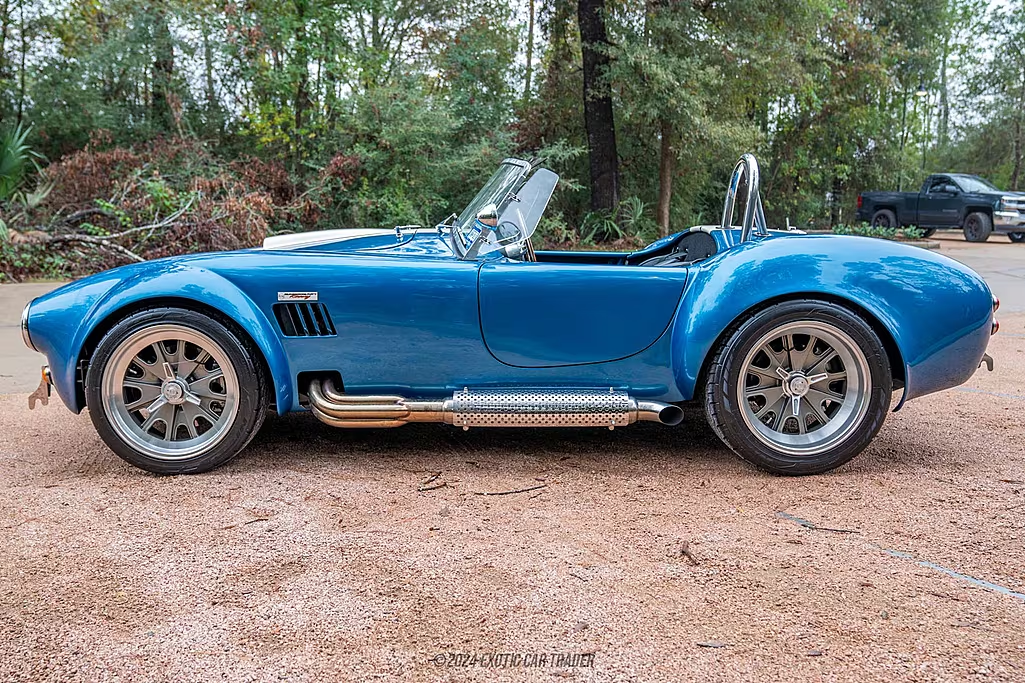
A Cobra roadster looks simple until the boxes land in your garage. Then the truth shows up in bags of hardware, raw fiberglass edges, wiring labels, brake lines, and the quiet fear that one missed bracket can cost you a month. An AC Cobra Replica project is less about picking the prettiest body and more about choosing the right level of work for your skill, space, budget, and patience. Factory Five suits the builder who wants a deep hands-on project, Shell Valley and Hurricane appeal to buyers who want fuller parts support, Unique leans toward traditional detail, while Backdraft and Superformance fit people who want less wrenching and more finished-car feel. Factory Five says its Mk4 complete kit still needs the engine, transmission, and rear end, while Backdraft lists hand-built roadsters from $66,900 and highlights independent suspension and power disc brakes. For a buyer comparing a dream build with a real driveway budget, a trusted automotive project guide can help keep the decision grounded before emotion takes over.
AC Cobra Replica Choices Start With Build Style
The first decision is not paint color, engine size, or whether side pipes should be polished. It is how much of the car you want to create yourself. A home builder in Ohio with a two-car garage, a patient spouse, and a winter off-season has a different path than a California buyer who wants a titled, painted car with sorted brakes and no fiberglass dust in the laundry room. The wrong kit does not always fail because it is poor. It fails because it asks for a kind of work the buyer did not want to do.
Factory Five roadster versus other do-it-yourself kits
The Factory Five roadster is the default answer for many American home builders because it has a large owner base, long-running forum support, and a layout built around modern parts rather than strict museum-grade copying. That matters when you are stuck on a Saturday night and need photos from someone who already solved the same clutch-cable, brake-bias, or seat-fit problem. Factory Five states that the Mk4 Complete Kit includes the main package but leaves the engine, transmission, and rear end to the builder.
That missing drivetrain is not a flaw. It is freedom with a bill attached. A Coyote-powered roadster, a small-block Ford build, and a mild street cruiser with a Tremec do not become the same car. The non-obvious part is that the less “complete” choice can be safer for the right buyer, because it forces you to choose parts around one plan instead of inheriting compromises from someone else’s shopping cart.
Shell Valley and Hurricane sit closer to the builder who wants a packed kit and fewer open-ended decisions. Shell Valley lists Kevlar-reinforced bodies, a 2-inch by 4-inch frame, and pre-drilled or pre-cut areas for parts such as roll bars, filler necks, brake pedal mounting, and steering column openings. Hurricane describes its 427 Roadster as an exceptionally complete kit with hardware, a build manual, and owner forum access. That kind of prep can save a first-time builder from death by small decisions.
Why a more complete kit can slow your mistakes
A more complete kit is not always faster in calendar time, but it often slows the kind of mistake that ruins momentum. When the frame holes are already drilled, the doors are already hinged, and the dash comes mounted, the builder spends less time inventing solutions. That makes a Cobra kit car feel less like a scavenger hunt and more like a hard, fair project.
Still, “complete” can create false comfort. A kit can include many parts and still demand body fitting, brake plumbing, electrical patience, alignment work, and state paperwork. The first-time buyer often asks, “Which kit has the most parts?” The better question is, “Which kit leaves me with the fewest choices I am likely to get wrong?”
Think of a retired mechanic in Texas who has built hot rods since the carburetor days. He may enjoy measuring, trimming, and reworking brackets. A software engineer in suburban Seattle may prefer a kit that trades some freedom for order. Neither person is wrong. The build should match the hands, not the fantasy.
Picking Between Kit, Roller, and Turnkey-Minus Cars
Once you know how much work you want, the market starts to make sense. A full do-it-yourself kit gives you the deepest attachment to the finished car. A roller gives you a body, chassis, suspension, interior, paint, and many major systems already handled. A turnkey-minus car lands near the top of the ease scale because the drivetrain is the main missing piece. The catch is emotional. The more finished the car arrives, the less it feels like “your build,” even if it is the smarter buy.
Cobra kit car budgets should start after the invoice
The cheapest invoice rarely creates the cheapest finished car. A builder may look at a starter package and feel clever, then spend months buying fasteners, hoses, fittings, gauges, pedal parts, brake upgrades, weather gear, insulation, seats, and tools. Paint alone can turn a tidy plan into a hard talk with the bank.
A realistic USA home budget should include the kit, shipping, engine, transmission, rear axle or independent rear setup, wheels, tires, paint, wiring supplies, fluids, alignment, state inspections, title fees, insurance, and at least one rescue fund. That rescue fund is not pessimism. It is what keeps a small mistake from becoming a stalled project under a tarp.
Here is the counterintuitive truth: a higher starting price can be cheaper for the builder who values time, fit, and fewer outside purchases. The buyer who chooses a fuller kit may spend more on day one but avoid fifty small orders, five wrong parts, and three weekends lost to missing hardware. That does not show up in the brochure. It shows up in your garage.
Backdraft and Superformance make sense for different buyers
Backdraft is best understood as a roadster for the buyer who wants the shape, sound, and drama without a full scratch-style home build. Its official site lists the RT4 Classic Edition from $66,900 and notes features such as full independent suspension and power disc brakes. That tells you the buyer profile right away. This is not the person who wants raw fiberglass on jack stands for two years.
Superformance sits in a higher-authenticity, dealer-supported lane. Its site lists Cobra MKIII 427 and MKII 289 models and states that the MKIII is built under license from Carroll Shelby Licensing Inc. For some buyers, that license and finished-car presence matter more than saying, “I built every inch.”
That does not make Superformance the best choice for each home builder. It may be the wrong choice for someone who wants to learn fabrication, wiring, brake setup, and body fit. It may be the right choice for the buyer who has already built cars and knows the value of time. Experience sometimes makes people choose less work, not more.
What Matters in the Garage Before the First Bolt Turns
A roadster build is not one job. It is a chain of small jobs that punish disorder. You need room to store the body, frame, seats, glass, exhaust, wheels, boxes, and parts you should not lose. You also need a way to label, photograph, and protect every piece. The garage does not have to look like a race shop, but it cannot be chaos with a workbench.
home garage build planning, tools, and space
A home garage build works best when you plan the room before you order the kit. Two clear bays are better than one cramped bay. A rolling cart, labeled bins, a torque wrench, jack stands, a brake flaring tool, rivet tools, a decent drill, and bright lights will do more for your sanity than a giant toolbox full of things you rarely touch.
The most overlooked tool is a camera. Take photos before removing panels, after mockup, before drilling, and before final assembly. You will think you remember where the spacer went. You will not. A phone full of boring photos can save an entire weekend when the manual is clear but your memory is not.
This is where the Factory Five roadster community has an edge. A large builder base means you can often compare your garage problem to someone else’s photo thread. But a smaller brand with better factory phone support may beat a giant community when you need a straight answer. Support is not only volume. It is access.
Suspension, bodywork, and drivetrain choices
Suspension choice decides more than ride feel. A live axle can suit a rough, old-school street car and keep costs under control. Independent rear suspension can ride better, put power down with more polish, and make the car feel less nervous on broken pavement. Neither is automatically right. The tire, alignment, shock setup, and driving style decide the result.
Bodywork is where many confident builders meet humility. The shiny finished roadster at a cars-and-coffee meet hides hours of gapping doors, shaping edges, fitting the hood, setting the trunk, and correcting small waves. A kit with more body prep can be worth the money if you do not have a trusted painter nearby.
Engine choice brings the same trap. A 600-horsepower build sounds heroic until you sit in a short-wheelbase roadster with side pipes, summer heat, and no modern safety net. For street use, a mild small-block or well-mapped modern Ford engine may create more joy than a monster that scares you out of driving it. The better build is the one you reach for on a Tuesday night, not the one that wins a parking-lot argument.
Title, Insurance, and Long-Term Ownership Choices
The build does not end when the engine fires. In the USA, title, registration, emissions rules, inspection, and insurance can shape the entire project. A buyer in California faces a different process than someone in Florida, Texas, or Tennessee. State rules can affect engine choice, receipts, VIN assignment, smog testing, and how the car is described on the title.
Kit car registration is a build step, not paperwork
The National Highway Traffic Safety Administration has explained that kit cars made from a mix of old and new parts may be treated differently from newly manufactured vehicles, but registration must meet the rules of the state where the car is licensed. That single point should change how you plan the whole build.
California’s DMV, for example, says a specially constructed vehicle may need a title application, vehicle verification, statement of construction, bills of sale for major parts, safety inspection, smog certification, fees, and a DMV visit. Your state may be easier, but easy is not the same as casual. Keep receipts for the frame, body, engine, transmission, and major donor parts from day one.
Use the NHTSA kit car guidance as a starting point, then check your state DMV before buying the kit. That order feels boring, but it can prevent the worst outcome: a finished car that cannot get plates without expensive changes.
Resale favors clean records over loud spec sheets
Cobra buyers love spec sheets, but resale buyers love clean records. A neat binder with the certificate of origin, engine invoice, transmission receipt, paint records, alignment sheet, wiring notes, and title documents can make the car feel safer to buy. A wild engine with no paperwork can scare off the exact buyer who has the money.
Unique Motorcars aims at the buyer who cares about traditional look and details. It offers 289 and 427 kits and turnkeys, with original-style touches such as dashboard layout, roll bar style, leather seats, and custom headers matched to the engine block. That kind of authenticity can help a future buyer understand what the car is trying to be.
Long-term ownership also means comfort. Heat management, seat angle, pedal spacing, steering effort, clutch weight, and exhaust volume decide how often you drive the car. A roadster that looks mean but cooks your feet after twenty minutes becomes garage art. A slightly calmer build with good cooling, sorted brakes, and a clean title becomes part of your life.
Conclusion
The smartest Cobra project starts with honesty, not horsepower. Decide whether you want a true garage education, a guided assembly, a roller, or a nearly finished roadster before you fall for paint, stance, or engine noise. A builder who chooses the right path will spend less time fighting the car and more time shaping it into something personal. The best AC Cobra Replica is the one that matches your tools, your state rules, your budget, and your appetite for unfinished work. Factory Five, Shell Valley, Hurricane, Unique, Backdraft, and Superformance all serve different kinds of buyers, so the winner is not one brand for everyone. It is the brand that leaves you proud instead of trapped. Keep receipts, study registration early, talk to owners, and price the full finish before ordering. Then build the car you will drive, not the one that only sounds good online. For more planning help, start with classic car project budgeting and home garage performance upgrades before the first crate arrives.
Frequently Asked Questions
What is the best Cobra replica kit for a first-time home builder?
Factory Five is often the easiest starting point because the owner base is large, parts paths are well known, and build support is easy to find. A first-time builder who wants fewer open decisions may prefer Hurricane or Shell Valley because their kits are designed with more included parts.
How much does it cost to finish a Cobra roadster kit?
Many home builds land far above the kit invoice once engine, transmission, paint, wheels, tires, tools, shipping, registration, and insurance are counted. The safer plan is to price the finished car first, then work backward. A low kit price can still lead to a high final cost.
Is a turnkey-minus Cobra better than a kit?
It is better for buyers who want the driving experience without years of assembly. It is not better for someone who wants the pride and learning that come from building the car. The right choice depends on whether your goal is ownership, craft, or both.
Can I register a Cobra replica in any US state?
Registration rules vary by state, so you need to check your DMV before buying major parts. Some states focus on receipts and inspections, while others add emissions steps or special construction forms. Engine choice can affect the process, especially in stricter states.
Which engine is best for a Cobra replica build?
A mild small-block Ford, a 351-based stroker, or a modern Coyote can all work well. Street use rewards balance more than peak power. A lighter, calmer engine setup can make the car safer, cooler, and more enjoyable than a high-horsepower build.
Are Cobra replicas hard to insure?
They can be insured, but the process is easier with clean paperwork, photos, receipts, an agreed-value policy, and a clear title description. Specialty insurers often understand kit and replica cars better than standard carriers. Keep records from the first purchase.
Should I choose independent rear suspension or a solid axle?
Independent rear suspension usually rides better and feels more settled on uneven roads. A solid axle can cost less, feel traditional, and work well with the right setup. The better choice depends on your budget, roads, power level, and driving style.
Is building a Cobra replica worth it for resale?
Build it because you want the car, not because you expect profit. Resale depends on brand, title quality, paint, drivetrain, workmanship, and documentation. A clean, moderate, well-recorded build often attracts more serious buyers than an extreme car with gaps in the story.