A red oil light has a way of making a calm driver feel poor in the stomach. The hard part is that oil pressure sensor symptoms can look a lot like a dying engine during the first few minutes, especially when the dashboard gives you one tiny lamp and no explanation. In simple terms, assume the warning is real first: pull over when safe, shut the engine off, check the oil level, and listen for noise before you keep driving. That advice matters for a high-mileage Silverado in Ohio, a used Camry in Texas, or a weekend Mustang that sits through winter. False alarms do happen, and a bad sender can make a clean engine look sick. Still, guessing wrong can turn a small repair into bearing damage. For readers who follow practical car maintenance advice, the better habit is not panic. It is order. Check the basics, separate signal trouble from pressure trouble, then spend money where the evidence points.
Treat the Warning as Real Before You Blame the Sender
The first mistake is emotional. You see the light, remember a friend who replaced a cheap sender, and hope your case is the same. That hope can cost more than the part. A low oil pressure warning is not like a washer fluid lamp or a loose gas cap message. It is the car telling you the oil film between moving metal parts may be too thin to protect the engine.
The order of response matters because the engine does not care whether the dashboard is lying. It only cares whether oil reaches the loaded surfaces. A smart driver buys time for the engine before buying parts for the car.
Why the first minute matters
Oil does more than sit in the pan and wait for the next change. The pump pulls it through the pickup tube, sends it through the filter, then pushes it into bearings, cam journals, lifters, timing parts, and valve gear. When pressure falls, the weak spots show up fast. Rod bearings and main bearings do not have much patience.
This is why the safest move is boring: pull off the road, shut the engine down, and check the dipstick on level ground after giving the oil a moment to settle. Toyota’s own warning-light page treats red warning icons, including low engine oil pressure, as items needing immediate attention through the owner’s manual or service path, and that matches how good technicians think about the problem. You can link that point to Toyota warning-light guidance when you want an owner-facing reference.
The counterintuitive part is that a calm engine sound does not always clear the engine. Some engines will idle quietly with pressure too low for highway load. A worn pump, thinning hot oil, or a clogged pickup screen can act mild in a parking lot, then become ugly after ten minutes at 65 mph. Quiet is useful evidence. It is not a signed release.
Why oil level and pressure are not the same
Many drivers treat oil level and pressure as one issue. They are related, but they are not twins. Oil level is how much oil sits in the crankcase. Engine oil pressure is the force moving oil through the passages after the pump starts doing its work. A full dipstick can still come with poor pressure if the pump is worn, the pickup is restricted, the relief valve sticks open, or bearing clearances have grown with age.
The reverse can also confuse people. A car can be a quart low and still show normal pressure during ordinary driving, at least for a while. That does not make it safe to ignore the level. It means the warning lamp is not a full-time oil-level nanny. Some cars have a separate level sensor. Many older American trucks and budget cars do not.
Think of a 2008 Tahoe with 190,000 miles. The dipstick may show enough oil, yet the gauge drops at a hot idle after a long highway drive. That pattern may point toward worn internal clearances, weak pump output, thin oil, or a pickup tube seal issue. Replacing the sender first might be tempting because it is visible and cheaper. The better move is to prove pressure before celebrating.
Failing Oil Pressure Sensor Symptoms That Point to a Bad Reading
A bad sensor usually creates a story that does not fit the rest of the engine. The light flickers at odd times, the gauge jumps like it has stage fright, or a scan shows an electrical fault while the engine sounds clean. That mismatch is your opening. It does not mean the engine is safe yet, but it gives you a direction.
Some dashboards make this harder by showing a simple lamp instead of a number. Others show a gauge that looks precise but is damped or filtered by the computer. Either way, you are reading behavior over time, not trusting one moment of dashboard theater.
Flickering light with normal engine behavior
A classic false-warning pattern is a light that flickers at idle, disappears with a light tap of the throttle, and comes back after the engine gets hot. This can happen with true low pressure, so do not stop here. The clue is the rest of the picture. The oil level is correct, the oil is not fuel-thin, there is no knocking, the temperature stays normal, and the warning appears in a repeatable way over small bumps or at one rpm range.
That last detail matters. Wiring faults often show themselves when the engine moves on its mounts, when heat expands a connector, or when a harness rubs against a bracket. A worn oil pressure switch can also leak oil through the connector. If you unplug it and find oil inside the plug, corrosion, broken plastic, or a loose terminal, you have found evidence that belongs to the electrical side.
Here is the non-obvious part: the cheapest part is not always the cheapest repair path. Replacing the sender without checking the connector may leave the same warning in place. On some GM V8 engines, the sender sits behind the intake area, and access can turn a small part into a tiring job. Spend five minutes inspecting the plug before you spend an afternoon changing anything.
Erratic gauge numbers and wiring clues
A real pressure problem usually follows engine behavior. Pressure rises with rpm, drops when hot, and reacts to oil thickness and load. A false reading may ignore that pattern. The gauge can peg high with the key on, fall to zero while cruising, or bounce from normal to empty in one second with no change in sound. That kind of jump often points to the sender, the oil pressure switch, the cluster, or the wiring between them.
Scan data helps here. Many modern vehicles let a scan tool read the pressure value or at least the switch state. If the dash says zero but the computer data stays steady, the issue may live in the cluster or communication path. If both the dash and the computer show a strange value, the sender circuit becomes more suspect. If neither scan data nor dash data can prove pressure, a mechanical gauge is the tie-breaker.
A practical example: a driver in Phoenix sees the gauge on a 2015 pickup drop to zero at stoplights in August, but the engine stays smooth and quiet. The oil level is correct. No metal noise. No overheating. A shop installs a test gauge and sees stable hot idle pressure. In that case, the sender or circuit becomes the target, not the pump. Heat exposed the weak signal, not a dead engine.
How Actual Low Oil Pressure Feels Different
True pressure loss usually brings more than a lonely dashboard light. It has a mood. The engine may sound harsher, idle rougher, run hotter, or react worse when the oil is hot and thin. This section is where fear becomes useful. You are not trying to diagnose every internal part from the driver’s seat. You are deciding whether to shut it down and tow it instead of gambling on one more trip.
That decision can feel dramatic in the moment. It is not. A tow bill is annoying, but it is small next to a locked-up engine, a missed work week, or a used-car loan on a vehicle that no longer runs.
Noises, heat, and pressure loss under load
The sound many people notice first is ticking from the top end. Lifters, followers, and cam-related parts may complain when oil delivery gets weak. Deeper knocking is scarier because it can point toward bearing trouble. A soft tick after a cold start may fade in seconds. A knock that grows with rpm after the low oil pressure warning appears deserves a tow, not a longer test drive.
Heat can add another clue. Oil carries heat away from busy surfaces. When flow drops, friction and temperature can climb. You may see the coolant gauge creep, smell hot oil, or notice the engine feels strained. None of those signs prove the exact cause, but together they push the case away from a simple sender fault.
The counterintuitive part: a warning that appears only after warm-up may be more serious than one that appears at key-on and never changes. Hot oil thins. Worn bearings bleed off pressure more easily after the engine is fully warm. A bad sender can also fail with heat, so you still test. But hot-idle pressure drop is a pattern mechanics respect because engines wear in the gaps you cannot see.
Common causes in older American daily drivers
In the U.S., many people meet this problem on older pickups, SUVs, and commuter sedans. Long oil-change gaps, cheap filters, sludge from short trips, towing, high idle hours, and ignored leaks all shape the story. A work truck that idles on job sites may have fewer highway miles than expected, yet the engine has spent thousands of hours hot, loaded, and moving oil at low rpm.
Common causes include low oil level, incorrect oil viscosity, a clogged pickup screen, a weak pump, a stuck pressure relief valve, worn bearings, a poor filter, and sludge blocking passages. A crushed or low-quality filter can also create strange behavior after service. That is why the timeline matters. If the warning started one day after an oil change, look at the filter, oil grade, drain plug, and level before blaming deep engine parts.
A small example says a lot. A driver gets a quick-lube oil change on a 2012 Accord and sees a pressure warning at the first long stoplight. The shop used the right amount, but the filter seal from the old filter stuck to the housing, creating a leak when the new filter went on. That is not a sensor story. It is a service error that can empty an engine fast.
A Safe Diagnostic Path Before You Spend Money
By now, the pattern is clear: do the cheap checks first, but do not let cheap checks become cheap guesses. You need a path that protects the engine and protects your wallet. The goal is not to prove yourself right in the driveway. The goal is to avoid replacing a sender on an engine that has no pressure, and avoid tearing down an engine because a connector lied.
This is also where patience beats pride. The driver who says “it was probably the sender” may get lucky once. The driver who gathers proof builds a habit that saves engines over a lifetime.
Check level, leaks, and codes before replacing parts
Start with the dipstick if your vehicle has one. Park on level ground, shut the engine off, wait a few minutes, wipe the stick, reinsert it, then read it again. If the oil is below the safe mark, add the correct oil in small amounts and recheck. Do not overfill. Too much oil can foam, and foamy oil does a poor job building pressure.
Next, look under the vehicle and around the filter, drain plug, valve covers, oil cooler lines, and sender area. Fresh oil has a shine. Burnt oil has a smell. Oil inside the connector near the sender points toward the signal side, but an external leak near the sender can still lower the level over time. You are looking for a full story, not one clue.
Codes can help, but they do not replace pressure testing. A code for the oil pressure switch circuit may tell you the computer saw an electrical value it did not trust. It may not tell you whether the crankshaft bearings are happy. This is a good place to add an internal link such as engine warning light troubleshooting, because many readers need help separating dash messages from mechanical proof.
Confirm pressure with a mechanical gauge
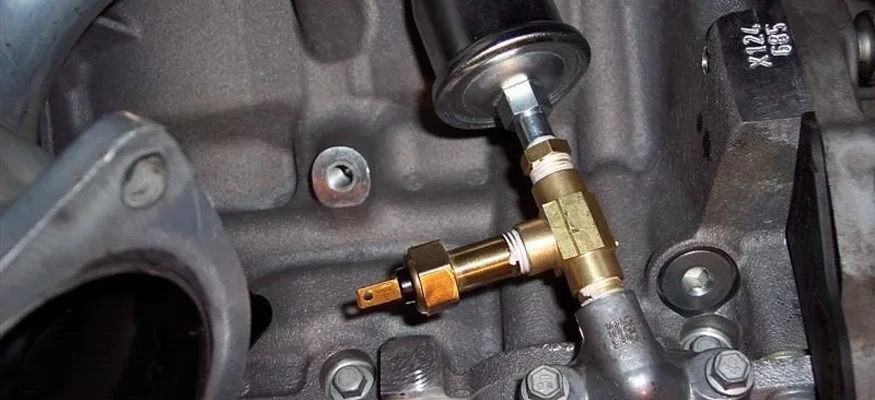
A mechanical oil pressure gauge is the honest witness. A technician removes the sender, installs a test gauge in the correct port, starts the engine, and compares cold idle, hot idle, and raised-rpm pressure against the service information for that engine. This test cuts through drama. If test pressure is good, you chase the sensor circuit. If test pressure is poor, you stop blaming the messenger.
The test is not only for repair shops. Skilled DIY owners can do it, but the risk is mess, wrong adapters, burns, stripped threads, and false readings from a poor connection. On many newer cars, access is tight. For most drivers, paying an independent shop for one hour of testing is cheaper than replacing parts by mood.
Here is the mild surprise: a confirmed bad sender is good news, not a small nuisance. It means the engine still has the pressure it needs, and the repair is about restoring trust in the warning system. After the repair, clear any codes, verify the dash behavior, and recheck for leaks. Then keep the old lesson. A warning light is not the diagnosis. It is the start of one.
If you maintain an older truck or family SUV, pair this with a service log and a simple used truck maintenance checklist. Write down the oil brand, viscosity, filter, mileage, and any warning behavior. That record can turn a vague dashboard scare into a pattern a mechanic can confirm.
Conclusion
The oil light asks for discipline before it asks for money. When it appears, the safest driver does not choose between panic and denial. You stop, check the level, listen, look for leaks, and decide whether the car moves again under its own power. The smart way to read oil pressure sensor symptoms is to compare the signal with the rest of the engine story. A flickering gauge, clean engine sound, normal level, and electrical clues may point to a bad sender. Noise, heat, low level, fresh leaks, or pressure loss under load point to a deeper problem. For a daily driver, that difference is the gap between a simple repair and a ruined engine. Keep a small flashlight in the glove box, learn where your dipstick and oil cap are, and use a real pressure test when the clues disagree. If you are unsure, choose the boring answer: stop the car and test before the next errand. Start with safety, then let evidence pick the repair.
Frequently Asked Questions
How do I know if my oil pressure sensor is bad or my engine has low pressure?
Start by treating the warning as real. Shut the engine off safely, check oil level, inspect for leaks, and listen for ticking or knocking. A normal level, quiet engine, erratic gauge, and electrical code point toward a sensor fault. A mechanical gauge gives the answer.
Can I drive with the oil pressure light on if the engine sounds normal?
No safe rule says to keep driving. A quiet engine can still have pressure too low for load or heat. Pull over, shut it down, and check the oil. If the warning stays on after the level is corrected, tow it or test pressure.
Why does my oil pressure light flicker only at idle?
Hot idle is when pressure is often lowest, so the cause can be real wear, thin oil, a weak pump, or a bad sender. If the light goes away with rpm, do not guess. Check level first, then confirm engine oil pressure with a test gauge.
Is an oil pressure switch the same as a sensor?
Many people use the names together, but they are not always the same design. A switch often turns a warning on or off at a set pressure. A sensor may send a variable reading to the computer or gauge. Your vehicle’s service data tells which one it uses.
Can low oil level cause low oil pressure?
Yes. If the pump pickup cannot stay covered in oil, pressure can drop, especially during braking, turning, hills, or acceleration. Low level can also expose leaks or oil burning. Add the correct oil to the safe range, then watch for the warning again.
What does a bad oil pressure reading look like on a dashboard gauge?
A false reading may jump from normal to zero in one moment, peg high with no reason, or change when you hit bumps. Real pressure usually changes with rpm and oil temperature. That pattern is not proof, but it helps decide the next test.
How much does it cost to replace an oil pressure sensor?
Many U.S. repairs land in the low hundreds, but access changes the bill. Some sensors sit in the open. Others hide behind engine parts, which adds labor. Testing first can save money because a true pressure problem will not be fixed by a new sender.
Should I replace the sensor before testing oil pressure?
Only when the evidence is strong and access is easy. If there is noise, heat, low oil, leaks, or a warning that stays on, test pressure first. Replacing the sender may hide the real issue for a short time while engine damage keeps growing.