Most Cobra dreams stall long before the first startup because the buyer picks the loudest fantasy instead of the right project. A Cobra Replica Build Kit asks more from you than money; it asks for space, patience, parts judgment, and a clear view of how the car will be driven. The best choice for a Florida retiree with a lift may be wrong for a Michigan dad sharing one garage bay with bicycles and snow tires. That is the point many comparison pages miss. They rank brands. A builder needs to rank friction. What will arrive in the crate? What still needs sourcing? How much bodywork can you stand? How hard will your state make the title? For readers comparing specialty automotive projects through independent build research, the smarter move is to choose the roadster around your limits before choosing around horsepower. A Cobra kit car can be a sharp weekend weapon, a polished showpiece, or a long lesson in small decisions. Pick the path first. The badge comes later.
Choosing a Cobra Replica Build Kit by Build Style, Not Brand Hype
The Cobra market looks simple from a distance: one famous shape, a V-8, side pipes, fat rear tires. Up close, it splits into different kinds of ownership. Some companies sell a body and chassis package that leaves you to source more pieces. Others sell a fuller package that shortens the hunt. A few offer finished or near-finished rollers, which moves the work from fabrication toward selection, inspection, and powertrain planning. Factory Five, for example, presents its Roadster in base and full-kit paths, while its full Mk4 package still leaves major drivetrain pieces such as engine, transmission, and rear end to the builder.
That difference matters more than brand noise. A home garage build often succeeds or fails in the boring middle, not the exciting first crate day. The question is not whether you can bolt parts together on a Saturday. The question is whether you can make three months of small choices without losing money, time, or interest.
A good comparison starts with how much decision-making you want to own. Some builders want the old-school hunt: donor parts, swap-meet finds, trial fitting, and late-night measuring. Others want a cleaner path where the kit maker has already made many of those choices. Both paths can produce a strong car. The wrong path can turn a dream into a half-covered frame under a tarp.
Why kit completeness matters more than advertised price
A lower entry price can feel like smart buying. Sometimes it is. If you already have a donor Mustang, a known rear axle, a local powder coater, and friends who know Ford small-block parts, a lighter kit can make sense. You may spend less cash up front and shape the car around pieces you trust.
For many first-time builders, that same lower price becomes a slow leak. Missing brackets, uncertain pedal parts, brake line choices, seat mounts, column details, and trim hardware create dozens of small orders. Each one looks harmless. Together, they drag the build across seasons. The cheaper kit did not betray you. It expected you to act like a parts manager.
A fuller package does not remove skill from the process. It removes hunting. That can be worth more than another 50 horsepower. A builder in suburban Ohio with one free weekend a month may finish a better car by buying more from the kit maker and spending fewer nights measuring parts that should have been decided on day one.
The builder profile that should guide the purchase
Start with your own shop, not the car. A two-car garage with a concrete floor, a rolling chassis dolly, wall storage, and a patient household is a workable space. A rented garage with poor lighting and no room to open both doors will punish even a good kit. The Cobra body is small, but the project spreads out fast.
Skill matters, but self-honesty matters more. A careful beginner can build a clean Cobra kit car when the package is well supported and the plan stays modest. A talented mechanic can still make a mess by chasing race parts before the body, wiring, cooling, and title plan are settled.
The non-obvious truth is that the easiest kit is not always the best teacher. A more involved package may build confidence if you enjoy solving fitment and sourcing problems. A fuller package may build a better car if your joy comes from driving, not parts chasing. Neither is morally better. One fits your patience. One does not.
Comparing Fiberglass, Aluminum, and Roller Choices for Real Garages
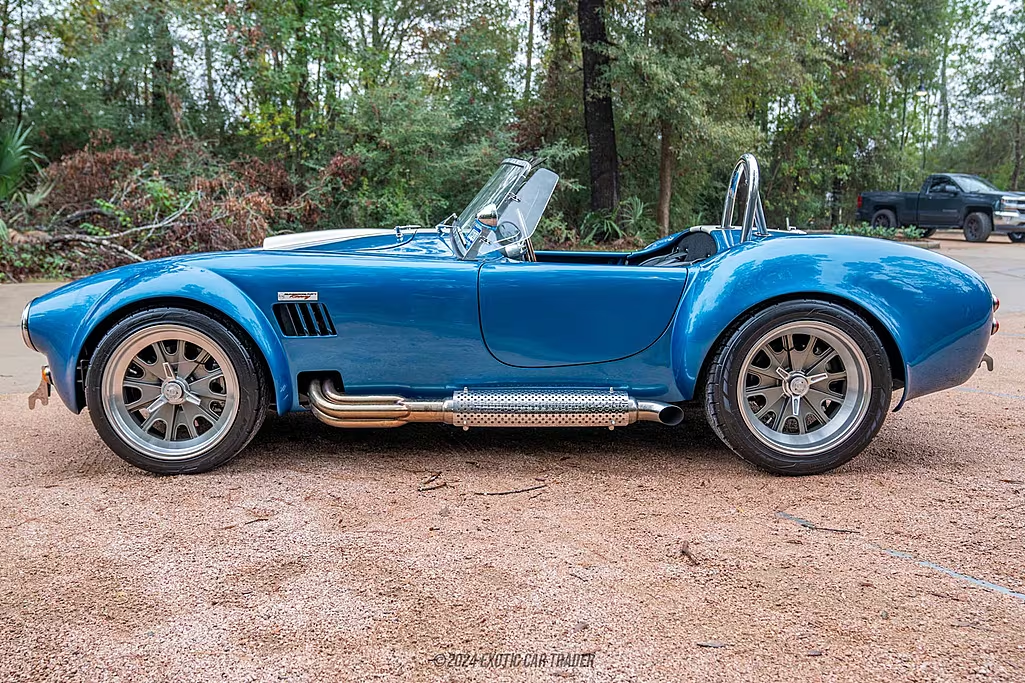
Once the build style is clear, the body and chassis choice becomes easier to judge. Most American home builders will look at fiberglass-bodied roadsters first because they are common, repairable, and easier to finish within a normal garage budget. Shell Valley’s basic 427 package, for instance, lists a fiberglass body with doors, hood, and trunk installed, along with body mounting pieces and a rectangular tube frame.
Premium choices change the conversation. ERA focuses on 427SC and 289FIA-style roadster replicas, while Kirkham is known for aluminum-bodied cars with original-style cues and lightweight options. Hurricane positions its 427 Roadster as a kit with a high parts count, and Superformance sells licensed continuation and replica vehicles through a different, more finished path.
The body material also changes who should touch the car after you. Fiberglass opens the door to more paint and body shops. Aluminum narrows that list. A roller may shift much of the finishing responsibility to a dealer or specialist, which can be a gift if your local labor market is thin. In rural areas, access to the right shop may matter more than the brand on the invoice.
Fiberglass roadsters reward patient fitment
Fiberglass is the practical language of the home-built Cobra world. It can be sanded, blocked, repaired, reinforced, and painted by shops that know custom cars. That does not mean it is easy. Door gaps, hood edges, trunk alignment, windshield fit, and body mounting points can eat hours that never show up in a build-sheet photo.
This is where many new builders misread the work. They fear wiring because wires look complex. Then body fitment becomes the real test because it demands patience instead of force. A crooked door gap will annoy you more than a hidden wiring junction once the car is painted.
A 427 roadster kit with a fiberglass body fits the builder who wants control over color, stance, cockpit trim, and engine choice without paying aluminum-car money. It also fits someone who can accept that the paint bill may hurt. Good paint prep is not glamour work. It is where the car earns its shape.
Aluminum bodies and finished rollers change the whole budget
An aluminum-bodied Cobra is a different animal. Kirkham’s 427 KMS/SC page notes weight ranges from over 2,400 pounds with original-style heavy parts to under 2,000 pounds with lightweight options and an aluminum engine. That tells you something deeper than a number: material choice pulls the whole car toward a different level of detail.
Aluminum attracts buyers who care about touch, sound, and authenticity. The panels have a presence fiberglass cannot copy. Yet the same material also changes the fear level. A small ding in bare or polished aluminum feels different from a repairable fiberglass scrape. The car may feel more special, but special can make owners timid.
Finished rollers create another path. They suit buyers who want the Cobra experience but do not want years of assembly. The tradeoff is less personal authorship. For some people, that is a relief. For others, it removes the reason they wanted the project. The better question is not “Which is best?” It is “Which one will I still be happy with after the first scratch?”
Drivetrain, Suspension, and Parts Planning Before You Order
The engine decision gets all the attention, which is why it causes trouble. A Cobra weighs far less than a modern muscle car, so power arrives with no politeness. A wild big-block may sound right in a parking lot and feel wrong on a broken city street. A streetable small-block, modern fuel injection, correct cooling, and a friendly clutch can make the car faster in the real world because you stop fighting it.
That is also why parts planning should start before the deposit. Transmission tunnel space, header routing, rear gear ratio, fuel system layout, brake balance, and pedal feel belong in the same conversation. A clean drivetrain plan saves money because it prevents buying the same part twice. For a deeper build budget worksheet, add your notes beside a future project car budgeting guide before ordering large components.
Parts planning also keeps the car from becoming a stack of almost-matching pieces. A clutch pedal ratio that feels wrong, a header that cooks the footbox, or a rear gear that makes highway driving miserable can spoil an otherwise expensive build. The best roadsters feel simple from the driver’s seat because the hard thinking happened before the first bolt was tightened.
Small-block power often makes the better street car
The romantic Cobra has a big-block voice. No one denies that. Yet many American builders are better served by a 302, 351 Windsor, Coyote, or similar small-block path. These engines can make enough power to scare you, fit more easily, and leave more room for heat management. Heat is not a side issue in a tiny roadster. It is part of the driving experience.
A Phoenix builder who plans summer coffee runs needs a different engine bay than a Maine builder who wants fall backroad blasts. Heat soak, fan control, footbox insulation, and exhaust routing can decide whether the car feels exciting or exhausting. The counterintuitive move is to build less peak power and more comfort. You may drive the car twice as often.
A Cobra-style roadster with 350 to 450 honest horsepower can already outrun the judgment of most street drivers. The goal is not to win an argument online. The goal is to come home wanting another drive.
Rear suspension choices decide how the car feels
Rear suspension may shape the car more than the engine does. A solid axle can feel direct, old-school, and tough. It also suits builders who want simpler service and a lower parts burden. Independent rear suspension can add grip and ride quality, especially on uneven roads, but it brings more parts, setup choices, and cost.
Factory Five’s Mk4 full package lists a 3-link rear suspension as standard, which shows how kit makers often balance simplicity, price, and street performance for broad use. That kind of decision should push you to think in systems. Tires, spring rates, shocks, brakes, steering geometry, and seat position all speak to each other.
This is where a 427 roadster kit becomes less about nostalgia and more about tuning. A poorly matched car with expensive parts can feel worse than a modest car with the right parts. Before you buy coilovers, wheels, or brakes, map the whole chassis plan. Keep that plan next to your garage tool setup for project cars, because the tools you lack will shape the work you can do well.
Registration, Safety, and Resale Details Buyers Forget
The least romantic part of the project may be the part that decides whether the car becomes a driver. State registration, emissions treatment, inspections, VIN assignment, insurance, and documentation vary across the United States. California, Texas, Florida, Arizona, Pennsylvania, and New York do not treat specialty vehicles with one shared mood. Your state motor vehicle office, local inspection shop, and insurer should be contacted before the kit leaves the factory.
Federal rules add more context but do not replace state homework. NHTSA’s official replica vehicle rule created an exemption path for registered low-volume manufacturers and refers to an annual 325-vehicle allowance, but that program is not the same thing as your personal title process for a garage-built car.
Safety should get the same early attention as the title. A Cobra-style roadster has no modern safety bubble to hide sloppy thinking. Seat mounts, belt angles, brake bias, steering joints, fuel line routing, battery hold-downs, and heat shielding deserve calm, slow work. The car may look old, but the build standard should not feel casual.
State paperwork can shape the whole build
Paperwork should start before parts. That sounds backward until you meet a builder who finished a beautiful car and then spent months proving what it was. Keep receipts for the kit, engine, transmission, rear end, major brake parts, steering parts, wheels, tires, and safety gear. Photograph the chassis number, engine number if available, and key build stages.
The EPA’s kit car policy describes kit vehicles as commonly involving new bodies, used drivetrains, and new or used chassis, while making clear that policy for kits differs from regular production vehicles. That is useful background, but your state may still ask its own questions.
A home builder in Pennsylvania may care about enhanced inspection paperwork. A California buyer may care about SB100-style specialty registration timing. A Texas builder may focus on assembled vehicle steps. The same kit can be simple in one county and irritating in another. The smart move is dull: call first, build second.
Resale favors documentation over drama
Most buyers think resale is about paint color and horsepower. Those matter. Documentation often matters more. A clean folder with invoices, wiring diagrams, alignment sheets, engine specs, tune notes, paint codes, and title history makes a buyer breathe easier. It says the car was built by an adult.
The market also tends to reward restraint. A car with a manageable engine, sorted cooling, clean wiring, comfortable seating, and no mystery noises will often attract more serious buyers than a monster build that cannot idle in July traffic. Drama photographs well. Sorted cars sell with fewer awkward questions.
This does not mean you should build a bland machine. It means the wild parts need a reason. If you want side pipes, a cammed idle, racing belts, and bare aluminum panels, own that choice. Then document it. The next owner may love the same flavor, but only if the car feels intentional instead of improvised.
Conclusion
The right Cobra project is not the one with the loudest spec sheet. It is the one that matches your garage, budget, patience, climate, state rules, and appetite for problem solving. A Cobra Replica Build Kit can turn into a car you treasure for decades, but only when the decision starts with the build experience instead of the finished photo. Choose fiberglass if you want a practical path with room for personal choices. Consider aluminum or a roller if authenticity, finish quality, or time matters more than hands-on assembly. Keep the drivetrain honest. Keep the paperwork clean. Keep your ego away from the order form.
A Cobra rewards confident restraint. That may sound strange for a car famous for noise and attitude, but the best home-built examples are not reckless. They are measured where it counts and thrilling where it should be. Build the car you will drive, not the car strangers will praise for ten seconds online.
Frequently Asked Questions
How much does it cost to build a Cobra-style roadster at home?
Most home builds land across a wide range because the engine, paint, wheels, trim, title costs, and tools change the final number. A budget-minded build can stay controlled, but premium paint, aluminum details, and a high-end drivetrain can raise the total fast.
What is the best Cobra kit car for a first-time builder?
A well-supported package with strong manuals, active owner forums, and fewer missing parts is the safest first choice. Brand matters, but support matters more. First-time builders should favor clear instructions, proven fitment, and easy parts sourcing over rare details.
Is a fiberglass body good enough for a replica roadster?
Yes. Fiberglass is common because it is repairable, familiar to custom paint shops, and practical for home builders. The key is patient body prep. A well-finished fiberglass car can look sharp, drive well, and cost less than an aluminum-bodied build.
Should I choose a big-block or small-block V-8?
A small-block is often the better street choice because it saves weight, improves space, and can still make more power than the chassis needs. A big-block suits buyers who value period sound and presence, but heat and drivability need careful planning.
Can I register a home-built Cobra-style car in any state?
Registration depends on your state, title documents, inspection process, emissions treatment, and parts records. Some states are friendlier than others. Call your motor vehicle office and a specialty insurance agent before ordering the kit, not after the car is finished.
How long does a home garage build usually take?
A focused builder with a full parts plan may finish in months, while a part-time builder can take several years. Bodywork, paint scheduling, missing parts, and life interruptions cause most delays. The kit itself is only one part of the timeline.
Are finished rollers worth the extra money?
They can be worth it for buyers who want the driving experience without doing every assembly task. A roller reduces build labor but also reduces personal control. Inspect the parts list, workmanship, title path, and powertrain requirements before paying more.
What tools do I need before starting the project?
Start with solid jack stands, a torque wrench, drill, rivet tool, wiring tools, brake flare tools, good lighting, storage bins, and measuring equipment. A lift helps, but organization helps more. Clean labeling saves hours when the project stretches across weekends.