
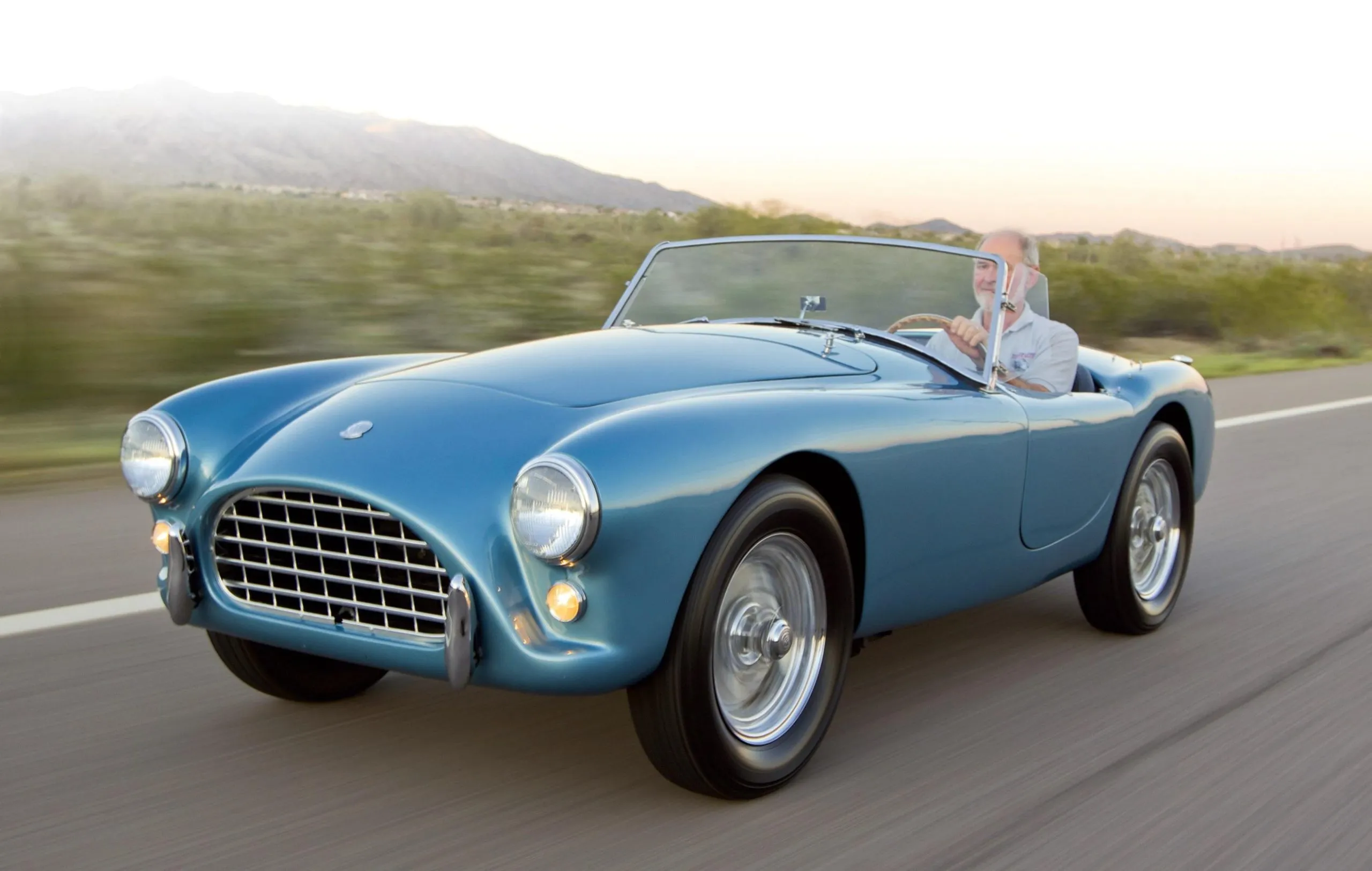
A car company can die long before the paperwork says so. Bristol Cars reached that point by trying to stay private, hand-built, and old-school while the luxury market around it became faster, louder, and far more digital. For American readers who know the brand only through auction listings, forum stories, or the odd import parked at a concours lawn, the short answer is clear: its final real production years centered on the Blenheim and Fighter, while the Bristol Bullet arrived too late to save the firm. The official Companies House record lists the later company as being in liquidation, with motor vehicle manufacture as its stated business activity.
That ending was not caused by one bad car. It was a long squeeze. Tiny volume, dated engineering, weak cash flow, uneven ownership, and a customer base that loved secrecy more than showroom traffic all played a part. The marque had charm. It also had a business model that asked modern buyers to forgive too much. For more context on rare-car ownership, a classic British sports car buying guide can help you compare passion against cost.
Bristol Cars Final Models: The Blenheim, Fighter, and Bullet Era
The last chapter looks confusing because there were three different kinds of “final” model. The Blenheim was the last long-running grand tourer, the Fighter was the last bold production swing, and the Bullet was the last public comeback promise. Seen together, they show a company trying to protect tradition, chase attention, and restart itself, all at once.
Why the Bristol Blenheim Was the Last True Old-Line Grand Tourer
The Bristol Blenheim carried the old house style into the 2000s with a straight-faced confidence few brands would dare. Its shape traced back through years of slow evolution, not fashion cycles. That was the point. It looked like a private club on wheels, with a long hood, slim pillars, and details that felt almost willfully out of step.
Autoweek described the Blenheim as the last series production vehicle from the marque and noted its link to the Type 603 line introduced in 1976. That matters because the Blenheim was not a clean-sheet luxury coupe. It was the end of a long bloodline, warmed over and kept alive for buyers who wanted discretion more than showroom theater.
The non-obvious part is that the Blenheim’s age was both its selling point and its trap. A Rolls-Royce buyer in the U.S. wanted quiet power, service support, and a dealer who answered the phone. A Bristol buyer wanted something rarer and stranger. That works when the buyer is patient. It breaks when the company needs new buyers fast.
By the time American collectors started treating low-volume British GTs as conversation pieces, the Blenheim already felt like an artifact. That helped its legend. It did not help production.
How the Bristol Fighter Tried to Make the Brand Loud
The Bristol Fighter felt like the company arguing with its own past. Instead of a quiet gentleman’s express, it arrived as a gullwing coupe with a V10 and an appetite for speed. The Owners’ Club describes the Fighter as the marque’s first two-seater in more than 40 years, with production dated from 2003 to 2011.
That car had theater. It also had a strange job. It had to pull attention toward a company that had spent decades avoiding attention. For American enthusiasts raised on Dodge Vipers, Aston Martins, and later McLaren road cars, the Fighter’s V10 story made sense on paper. A small British maker using big power can be fun.
But fun is not a sales network.
The Fighter’s problem was not that it lacked character. It had too much character for too few buyers. A supercar needs trust around it: parts, service, warranty confidence, media presence, and a clear reason to choose it over better-known names. Without that, even a wild car becomes a rumor.
The counterintuitive lesson is sharp. The Fighter may have been more modern than the Blenheim, yet it did not solve the older car’s deepest problem. It still belonged to a company with tiny reach and a private way of selling. A louder product cannot fix a quiet business.
The Business Friction That Made Survival Hard
The end was not a clean fall from success into failure. It was more like watching a craftsman run a brilliant shop in a town where the customers had moved online. The skills were real. The loyalty was real. The operating model was the weak part, and it kept getting weaker as regulation, development costs, and buyer expectations rose.
Why Low Volume Became a Financial Cage
Low volume can make a luxury brand feel special. Ferrari built part of its mystique on scarcity. So did many British coachbuilders. But there is a hard line between controlled rarity and too few sales to fund the next car.
Bristol lived on the wrong side of that line for too long.
For a U.S. buyer, the math is easy to miss. You may see one rare coupe cross an auction block and think scarcity equals strength. Inside a manufacturer, scarcity can mean unpaid engineering bills, old tooling, limited crash testing budgets, and parts that depend on a handful of suppliers. A small repair issue becomes a company-level headache.
The official insolvency page shows a compulsory liquidation case, with the petition dated December 6, 2019, and the winding-up commencement dated January 22, 2020. Those dates matter because they show the end was not a vague rumor in the classic-car world. It became a formal legal process.
A useful comparison is the Morgan Motor Company, another British name with old-world charm. Morgan found ways to sell nostalgia while still refreshing chassis, safety, emissions, and production discipline. Bristol tried to sell mystery. Mystery is romantic until the invoice arrives.
How Secrecy Stopped Working in the Internet Age
For decades, the company’s reserve looked elegant. It had one famous London showroom, little interest in mass advertising, and a customer culture built on word of mouth. In an earlier age, that could signal confidence. In the 2010s, it started to look like absence.
American buyers expect information. They want build slots, videos, reviews, service maps, option lists, financing clarity, and owner feedback. Even wealthy collectors do research before wiring money. Silence no longer reads as class. It reads as risk.
That shift hurt small makers more than big ones. A large luxury brand can hide behind a global dealer body. A tiny one has to earn trust in public. Bristol’s old manners made that hard. It wanted to be known by the right people, not by everyone. The market stopped rewarding that distinction.
Here is the odd part: the brand’s refusal to chase every trend made it more memorable. That same refusal made it harder to sell a new car to anyone outside the faithful circle. The thing that protected the myth narrowed the customer base.
You can see the same tension in U.S. collector habits. A buyer may admire a low-mileage Blenheim at a show, then choose a Porsche 911 or Aston Martin for actual weekend use. Admiration is not the same as a purchase order.
The Bristol Bullet and the Failed Comeback
The Bullet should have been a clean reset. It had a simple pitch: open-top, retro design, BMW V8 power, carbon-fiber bodywork, and a limited run tied to the marque’s 70th anniversary. It sounded like the exact car that could turn dusty respect into new attention. Yet it became a symbol of how late the rescue had come.
Why the Bristol Bullet Looked Like the Right Car at the Wrong Time
The Bristol Bullet had the bones of a clever revival product. It avoided the hardest part of launching a full modern GT by becoming a light, emotional speedster. That made sense. A small company can sometimes restart with a halo car, not a full range.
Reports from the 2016 launch said the Bullet used a BMW-sourced 4.8-liter V8 and was planned as a limited run of 70 cars priced around £250,000. Carsales also reported a claimed sub-four-second run to 100 km/h and a limited 250 km/h top speed.
The U.S. equivalent would be a boutique roadster aimed at wealthy collectors who already own the practical toys. Think less daily driver, more Sunday-morning machine for someone with a climate-controlled garage. That buyer exists. The challenge is convincing that buyer the company will still exist when service is due.
The styling played the heritage card hard. The grille, tail details, and open cockpit nodded to mid-century cars without trying to copy them panel for panel. That was smart. A revival car should not look like a museum prop. It needs a pulse.
Still, timing beat design. By 2016, the luxury performance field was crowded. McLaren had become a serious force. Aston Martin was moving through a more visible product push. Porsche had near-perfect owner support. A rare badge alone was not enough.
Why No Production Bullet Reached Customers
The saddest detail is that the Bullet was not a bad idea. It was an underfunded idea from a weakened firm. Hagerty reported that 70 numbered examples were planned and that no production Bullet models were built or delivered to waiting clients.
That difference matters. A prototype can create headlines. Production creates a car company. The gap between the two is where many boutique manufacturers fail. You need supplier contracts, cash discipline, testing, quality control, warranty plans, and a way to handle late changes without burning the whole project down.
For readers in the United States, this is the same warning that follows many low-volume imports. The press launch may look rich. The car may sound wonderful. But ownership depends on parts flow, technical support, and legal clarity. A buyer is not only buying horsepower. They are buying a future relationship.
The Bullet also exposed a brand identity problem. Was the company a maker of quiet gentleman’s GTs, a supercar builder, or a heritage speedster shop? In a perfect world, it could be all three. In the real world, a small manufacturer has to pick one first.
That was the hidden cost of the final years. The company had name value, but its product story scattered. The Blenheim looked backward. The Fighter shouted sideways. The Bullet promised a new path. None created a stable bridge.
What Ended the British Manufacturer Beyond the Balance Sheet
A company ends on paper when the court, liquidator, or registry says so. A car maker ends earlier, when it can no longer turn identity into orders. That is what happened here. The marque had a devoted story, but it lost the ability to make that story pay for new metal.
Why Heritage Alone Could Not Carry a British Car Manufacturer
The phrase British car manufacturer carries romance in the American imagination. It suggests wood trim, leather, rainy test roads, old racing photos, and a stubborn engineer with a mug of tea. That romance sells, but only when paired with confidence.
Heritage can get a buyer to look. It cannot make the air conditioning work, pass emissions rules, or fund a new platform.
That is where the company ran out of road. Its early appeal came from aircraft discipline and postwar engineering. Its later appeal came from privacy and tradition. By the final years, the gap between those two stories had grown too wide. The brand still talked like an engineering house, but the cars looked underdeveloped next to newer luxury rivals.
The Gazette notice recorded the appointment of joint liquidators on February 3, 2020, giving a formal public marker to the collapse. The official Companies House record also lists the company status as liquidation, which is the cleanest place for readers to confirm the legal state.
A useful American example is Studebaker. Enthusiasts still respect the name, and some models have fierce followings. Yet love after the fact does not keep a factory open. The market often becomes generous only when the company is gone.
What the Ending Means for Collectors and the Brand’s Future
Collectors should treat the final models as three separate stories. The Blenheim is for the buyer who wants the last old-world GT experience. The Fighter is for the buyer who wants the strange, rare performance statement. The Bullet is more complicated because it sits between prototype legend and failed revival.
That does not make the Bullet uninteresting. It may make it more interesting. Cars that never became normal production machines often gain myth power because they leave unanswered questions. What would it have driven like? Could it have worked with enough money? Would American collectors have cared?
The better question is whether a revived version of the marque can avoid repeating the old mistake. Recent revival talk has centered on modern coachbuilding and future models, but Goodwood noted in 2024 that firm details were still limited and that the plan looked toward the marque’s 80th anniversary period. Hope is not a product plan.
A future owner of the name would need to do what the old company resisted: explain itself. Who is the car for? Where will it be serviced? Why should a buyer choose it over Bentley, Aston Martin, Porsche, or a restored classic? Those questions are not vulgar. They are survival.
That may be the most honest way to read the ending. The manufacturer did not fail because it lacked soul. It failed because soul had to carry too much weight.
Conclusion
The final chapter was less about one collapse than a slow mismatch between a secretive maker and a market that wanted proof. The Blenheim preserved the old mood, the Fighter tried to shock the brand awake, and the Bullet tried to turn history into a fresh start. Each car had a piece of the answer, but none had enough business behind it.
For U.S. collectors, Bristol Cars now sits in a rare space: too obscure for casual buyers, too fascinating for serious enthusiasts to ignore. Its story warns that heritage is not a shield. It is raw material. You still need money, service support, clear positioning, and a car people can order with confidence.
The British manufacturer ended because charm, privacy, and low volume stopped being enough. That does not make the cars less worthy. It makes them more honest. Before buying any late example, read service records, study parts support, and use a rare luxury car maintenance checklist before emotion takes the wheel.
Frequently Asked Questions
What were the final models made by the company?
The final real production story centers on the Blenheim and Fighter, while the Bullet was the last public comeback model. The Blenheim represented the old grand tourer line, the Fighter added V10 drama, and the Bullet was planned as a limited-run speedster.
Was the Bristol Bullet ever sold to customers?
No production Bullet models were delivered to normal customers. It was shown as a comeback car and planned for limited production, but the company collapsed before it became a true customer car with a stable production run.
Why did the British car manufacturer fail?
The failure came from low production volume, dated engineering, weak public visibility, high development costs, and poor timing. The brand had deep charm, but charm could not fund new models, service networks, compliance work, and buyer trust.
Is a late Bristol Blenheim worth buying in the United States?
It can be worth buying for a patient collector who understands rare-car costs. It is not a casual classic. Parts, specialist labor, and documentation matter more than mileage alone, so a pre-purchase inspection by a marque-aware expert is wise.
How rare is the Bristol Fighter?
The Fighter is rare even by boutique performance-car standards. Exact counts can vary by source, but it was built in tiny numbers compared with mainstream supercars. That rarity adds appeal, yet it also makes service planning more serious.
Did the company have strong links to BMW?
Yes, the early cars drew from prewar BMW engineering, and the later Bullet revived that connection with a BMW V8. That link gave the story symmetry, but it was not enough to turn the comeback plan into a stable production future.
Can the brand come back again?
A revival is possible in name, but a real comeback needs more than a badge and a design sketch. It would need funding, engineering partners, service plans, legal clarity, and a product that modern luxury buyers can understand.
What should collectors check before buying one?
Start with ownership history, service records, parts access, body condition, cooling system health, electrical work, and specialist support. A cheap neglected example can become more expensive than a better-kept car with a higher asking price.